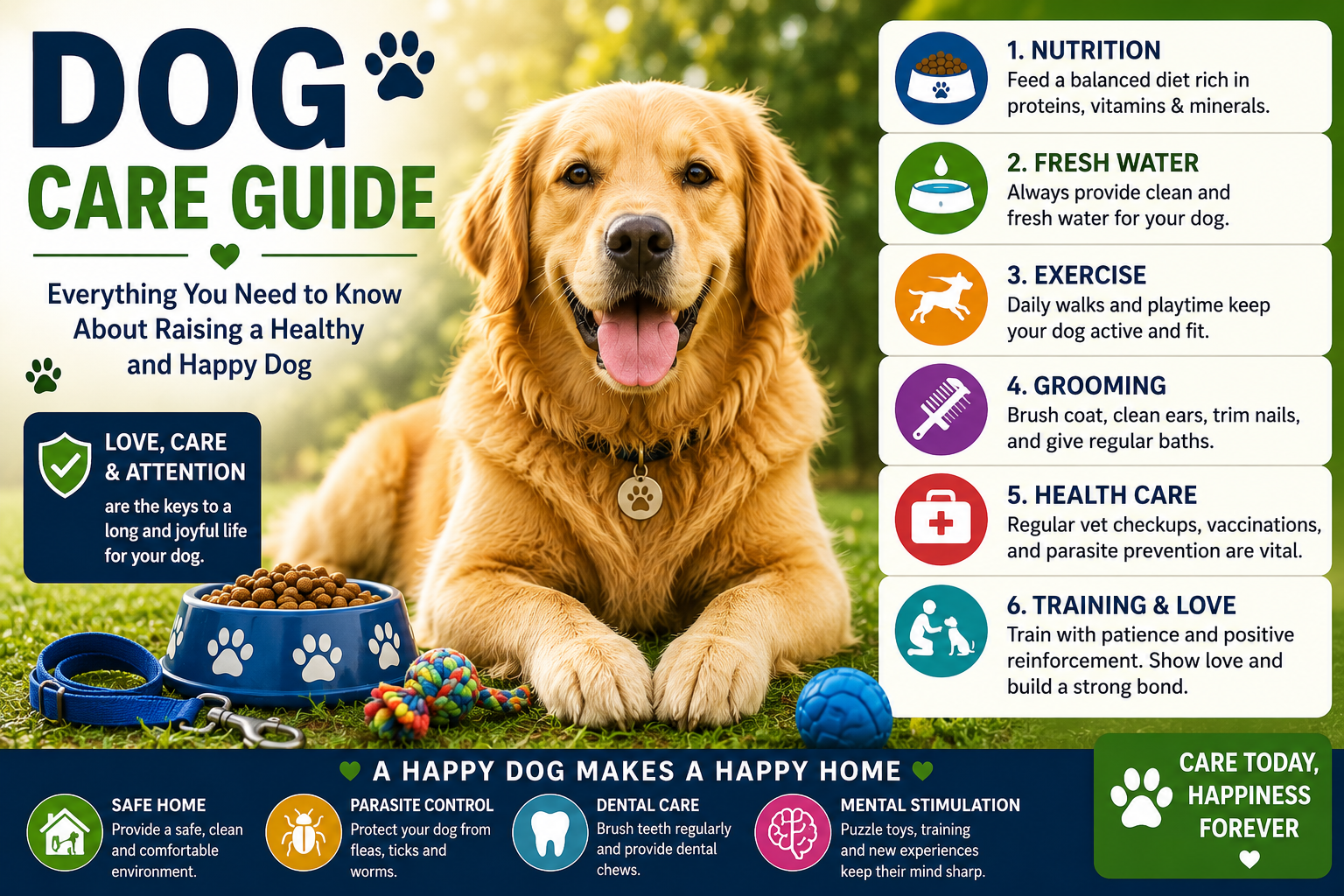

Introduction
Dogs are wonderful companions that bring love, happiness, and loyalty into our lives. Whether you have a small puppy, an energetic adult dog, or a senior pet, providing proper care is essential for its health and happiness. A complete Dog Care Guide helps pet owners understand their responsibilities and develop healthy habits that support their dogs throughout every stage of life.
Taking care of a dog involves much more than providing food and water. Dogs need regular exercise, proper grooming, veterinary checkups, training, mental stimulation, and emotional support. Every dog has different needs depending on its breed, age, size, and lifestyle.
In this article, we will explore practical ways to improve your dog’s daily routine, prevent common health problems, and create a safe and loving environment. Whether you are a first-time dog owner or have years of experience, this Dog Care Guide will help you make informed decisions and build a stronger relationship with your pet.
1. Understand Your Dog’s Basic Needs
Before bringing a dog home, it is important to understand the responsibilities involved in pet ownership. Dogs depend on their owners for food, shelter, safety, exercise, and companionship. Meeting these needs consistently helps them feel secure and comfortable.
A useful Dog Care Guide begins with understanding your dog’s individual requirements. Some breeds need plenty of physical activity, while others prefer shorter walks and relaxed playtime. Puppies need frequent meals, toilet breaks, and training, whereas senior dogs may require extra comfort and veterinary attention.
Observe your dog’s behavior and energy levels to understand what works best. Provide a comfortable sleeping area, clean water, suitable food, and enough time for exercise and interaction. Responsible ownership also means being prepared for veterinary expenses and unexpected health concerns.
2. Choose Healthy and Balanced Dog Food
Nutrition is one of the most important parts of responsible pet ownership. Dogs require a balanced diet that supplies protein, fats, carbohydrates, vitamins, minerals, and other essential nutrients.
This Dog Care Guide recommends choosing complete and balanced dog food appropriate for your pet’s age and health. Puppies generally need food formulated for growth, while adult dogs require nutrition that supports their normal activity and body condition. Senior dogs may benefit from dietary adjustments recommended by a veterinarian.
Read food labels carefully and follow appropriate feeding guidelines. Measure portions instead of filling the bowl without considering your dog’s needs. Treats should make up only a small part of the daily diet.
Avoid foods that can be dangerous for dogs, including chocolate, grapes, raisins, onions, garlic, alcohol, and products containing xylitol. If your dog eats something potentially toxic, contact a veterinarian immediately.
3. Always Provide Fresh Drinking Water
Water is essential for digestion, circulation, temperature regulation, and overall health. Every dog should have access to clean drinking water throughout the day.
Wash water bowls regularly and refill them whenever necessary. Dogs may drink more during hot weather or after physical activity, so pay attention to their hydration needs.
A practical Dog Care Guide also encourages owners to monitor changes in drinking habits. Drinking significantly more or less than usual can sometimes indicate an underlying health issue. If the change persists or appears alongside other symptoms, consult your veterinarian.
When traveling or going for walks, carry water and offer regular opportunities to drink, especially in warm weather.
4. Create a Daily Exercise Routine
Regular exercise helps dogs maintain a healthy weight, strengthen their muscles, and release excess energy. Physical activity can also improve confidence and reduce boredom.
The right exercise routine depends on your dog’s breed, age, fitness, and medical condition. Some dogs enjoy longer walks and outdoor adventures, while others prefer gentle walks and indoor games.
Following this Dog Care Guide, begin with activities that match your dog’s abilities. If your pet is not accustomed to exercise, increase the duration gradually. Avoid strenuous activity during extreme heat, and provide rest whenever your dog shows signs of fatigue.
Daily walks also allow dogs to explore their surroundings through smell and observation. Combine walking with supervised play, simple training games, and opportunities to interact safely with their environment.
5. Maintain Proper Grooming and Hygiene
Grooming helps keep your dog clean, comfortable, and healthy. Regular brushing removes loose hair, reduces tangles, and helps you notice skin irritation, lumps, or parasites.
Dogs with long or thick coats may need more frequent brushing than short-haired breeds. Bathing frequency depends on the coat, lifestyle, and skin condition. Use a shampoo made specifically for dogs rather than ordinary human shampoo.
An effective Dog Care Guide includes checking the ears, paws, nails, and skin Dog Care Guide regularly. Clean visible dirt gently, and ask a veterinarian about persistent redness, unpleasant odors, or unusual discharge.
Trim nails when needed, taking care not to cut into the sensitive tissue inside them. If you are unsure how to trim nails safely, seek help from a professional groomer or veterinarian.
6. Schedule Regular Veterinary Checkups
Veterinary care is essential for preventing, identifying, and treating health problems. Regular examinations allow professionals to assess your dog’s weight, teeth, skin, movement, and general condition.
Puppies need age-appropriate vaccinations and preventive care. Adult dogs also require routine health checks, while senior pets may benefit from more frequent examinations.
This Dog Care Guide encourages pet owners to maintain vaccination records and discuss parasite prevention with their veterinarian. Your veterinarian can recommend suitable treatments based on your dog’s age, weight, lifestyle, and local disease risks.
Seek prompt veterinary advice if your dog develops persistent vomiting, diarrhea, loss of appetite, unusual weakness, or sudden behavioral changes. Difficulty breathing, collapse, severe bleeding, and suspected poisoning require emergency attention.
7. Keep Your Dog’s Teeth Clean
Dental hygiene is often overlooked, but healthy teeth and gums are Dog Care Guide important for a dog’s comfort and well-being. Plaque buildup can contribute to bad breath, gum inflammation, and dental disease.
Brush your dog’s teeth with a toothbrush and toothpaste specifically designed for dogs. Introduce brushing gradually by allowing your pet to become comfortable with having its mouth handled.
A comprehensive Dog Care Guide should also include regular dental checks. Ask your veterinarian whether your dog needs professional cleaning or other preventive measures.
Dental chews and suitable toys may support oral hygiene, but they do not replace toothbrushing or veterinary examinations. Avoid excessively hard objects that may damage teeth.
8. Train Your Dog With Patience
Training helps dogs understand household rules and respond safely to everyday situations. Basic commands such as sit, stay, come, and leave it can improve communication and reduce risks.
Use positive reinforcement to reward desirable behavior with praise, toys, or suitable treats. Keep training sessions short and enjoyable. Consistency is more effective than harsh punishment, which may create fear and confusion.
According to this Dog Care Guide, training should begin with simple skills and gradually progress to more challenging situations. Practice in a quiet environment before introducing distractions.
If your dog shows serious fear, aggression, or persistent behavioral difficulties, consider working with a qualified, reward-based trainer or veterinary behavior professional.
9. Give Your Dog Emotional Support
Dogs need companionship, attention, and opportunities to feel safe Dog Care Guide. Spending quality time together strengthens your bond and supports emotional well-being.
Play games, enjoy walks, practice training, and allow your dog to rest near you when appropriate. Learn to recognize body language that indicates discomfort, anxiety, or excitement.
A helpful Dog Care Guide reminds owners that dogs should not be forced to interact with unfamiliar people or animals. Give them space when they appear uncomfortable and provide a quiet place to relax.
Dogs that spend long periods alone may benefit from gradual independence training, enrichment toys, and a predictable daily routine. If your dog develops persistent distress when left alone, seek professional advice.
10. Make Your Home Safe for Dogs
Your home should provide a secure environment where your dog can rest and explore without unnecessary risks.
Keep cleaning products, medicines, chemicals, electrical cords, and potentially toxic foods out of reach. Secure rubbish bins and remove small objects that could be swallowed. Check toys regularly for broken parts.
This Dog Care Guide also recommends checking gates, fences, balconies, and outdoor spaces to reduce the risk of escape or injury. Provide shade and shelter if your dog spends time outdoors, and never leave it unattended in a hot vehicle.
Create a comfortable sleeping area with suitable bedding. Ensure that food and water bowls are easy to access and that your dog can move around without slipping or encountering dangerous obstacles.
11. Take Special Care of Puppies
Puppies need additional attention because they are learning about the world while developing physically and mentally.
Feed a suitable puppy diet, establish a toilet routine, and provide frequent opportunities for rest and supervised play. Young puppies may need several small meals each day, depending on their age and veterinary advice.
A puppy-focused Dog Care Guide emphasizes gentle socialization and reward-based training. Introduce new sounds, people, surfaces, and environments gradually, while following your veterinarian’s advice about vaccination and infection risks.
Puppy-proof your home and supervise chewing, playtime, and outdoor exploration. Be patient with accidents because house training takes time and consistency.
12. Help Senior Dogs Stay Comfortable
As dogs age, they may experience reduced mobility, changes in hearing or vision, and lower energy levels. Adjusting their routine can help them remain comfortable.
Provide a supportive bed, easy access to water, and nonslip surfaces. Shorter walks and gentle activities may be more appropriate than demanding exercise.
This Dog Care Guide recommends monitoring senior dogs for changes in appetite, weight, movement, sleep, and behavior. Do not assume that stiffness or confusion is simply a normal part of aging.
Regular veterinary examinations can help identify conditions that may be managed through treatment, environmental adjustments, or dietary changes.
13. Prevent Fleas, Ticks, and Other Parasites
Parasites can cause discomfort and may spread disease. Fleas can lead to itching, ticks may transmit infections, and intestinal parasites can affect digestive health.
Check your dog’s coat after outdoor activities, particularly around the ears, neck, paws, and other areas where ticks may attach. Wash bedding and maintain a clean living environment.
A responsible Dog Care Guide recommends asking your veterinarian about appropriate parasite prevention. Never use products intended for another species unless a veterinary professional confirms they are safe for your dog.
If you notice persistent scratching, hair loss, visible parasites, or digestive problems, arrange a veterinary assessment.
14. Maintain a Healthy Body Weight
Keeping your dog at a healthy weight supports mobility, energy, and long-term health. Excess weight can place additional stress on joints and increase the risk of certain health problems.
Measure meals carefully and consider the calories provided by treats. Choose portion sizes based on your dog’s age, activity level, and body condition.
This Dog Care Guide recommends discussing weight management with your veterinarian if your dog is overweight or underweight. Make dietary changes gradually and combine suitable nutrition with safe exercise.
Avoid extreme diets or sudden food restrictions. A gradual, professionally guided approach is safer and more sustainable.
15. Provide Mental Stimulation
Dogs need mental activities as well as physical exercise. Without enough stimulation, some dogs may become bored and develop unwanted behaviors such as excessive barking or destructive chewing.
Try puzzle feeders, scent games, hide-and-seek, and short training sessions. Rotate toys to maintain interest and choose products suitable for your dog’s size and chewing habits.
An important Dog Care Guide principle is to make enrichment enjoyable rather than stressful. Start with easy games and increase difficulty as your dog learns.
Supervise activities involving small objects or chew toys that could break apart, and remove damaged items promptly.
16. Prepare for Emergencies
Every dog owner should have a basic emergency plan. Keep your veterinarian’s contact information, emergency clinic details, vaccination records, and medication information readily available.
A pet first-aid kit may include gauze, suitable bandages, and saline for cleaning minor wounds. Ask your veterinarian which supplies are appropriate for your pet.
This Dog Care Guide emphasizes that first aid is not a replacement for professional treatment. Never give human medication or induce vomiting unless a veterinarian specifically instructs you to do so.
In an emergency, contact a veterinary professional promptly and follow their instructions.
17. Follow a Consistent Daily Routine
A predictable schedule can help dogs feel secure and make daily responsibilities easier for owners to manage.
A typical routine might include a morning toilet break, a walk, breakfast, rest, afternoon playtime, an evening walk, and meals according to an appropriate feeding schedule. Include opportunities for training, social interaction, and relaxation.
Every dog is different, so adjust activities according to individual needs and your household schedule.
This Dog Care Guide encourages consistency rather than perfection. A flexible routine that reliably meets your dog’s needs is more useful than a strict timetable that is difficult to maintain.
18. Learn From Trusted Dog-Care Resources
Learning about dog health, behavior, and nutrition helps you make better decisions. However, online information should come from reliable sources and should not replace individualized veterinary advice.
For additional educational resources, visit the American Kennel Club’s expert advice website:
The website provides information on training, grooming, nutrition, health, and responsible dog ownership.
Use this Dog Care Guide as a starting point, and consult your veterinarian whenever you have concerns about your dog’s health, diet, behavior, or preventive care.
Conclusion
Taking care of a dog is a rewarding responsibility that requires patience, knowledge, and consistency. From balanced nutrition and daily exercise to grooming, training, and veterinary checkups, every aspect of your dog’s routine contributes to its well-being.
This Dog Care Guide has explained the essential steps for helping puppies, adult dogs, and senior pets live healthier and happier lives. The most important thing is to understand your dog’s individual needs and make adjustments as it grows and changes.
Start with simple habits, such as providing fresh water, measuring meals, maintaining a regular walking schedule, and spending quality time together. Gradually introduce other practices that improve comfort, safety, and health.
Remember that every dog deserves kindness, protection, and companionship. By providing responsible care and seeking professional advice when needed, you can build a strong relationship with your pet and help it enjoy a happy life as part of your family.