Dog Grooming is an essential part of responsible pet care. It helps keep your dog clean, comfortable, and looking healthy while allowing you to notice changes in the skin, coat, ears, paws, and nails. Every dog has different grooming needs depending on its breed, coat type, age, activity level, and lifestyle. Establishing a suitable routine can make grooming a positive experience for both you and your pet.
Whether you Dog Grooming have a playful puppy, an active adult dog, or a senior companion, understanding the basics of Dog Grooming can help you maintain your pet’s hygiene and overall well-being. From brushing Dog Grooming and bathing to nail trimming and dental care, simple habits can make a meaningful difference.
Why Is Dog Grooming Important?
Regular Dog Grooming supports cleanliness and comfort. Brushing removes loose hair, Dog Grooming dirt, and some debris while helping prevent tangles and mats. Bathing helps remove unpleasant odors and dirt when your dog needs it. Nail care supports comfortable movement, Dog Grooming and checking the ears, eyes, and skin can help you identify potential problems early.
Grooming is also a useful opportunity to build trust with your dog. Gentle handling and rewards can teach your pet that being brushed Dog Grooming or having its paws touched does not have to be frightening. Keep sessions short at first, especially if your dog is young or unfamiliar Dog Grooming with grooming.
Grooming does not replace veterinary care. If you notice persistent itching, unusual hair loss, swelling, pain, or an unpleasant smell, consult a veterinarian rather than relying only on grooming products.
How Often Should You Groom Your Dog?
The ideal Dog Grooming schedule depends on your dog’s coat and daily activities.
- Short-haired dogs: Usually benefit from brushing once or twice a week.
- Long-haired dogs: Often need brushing several times a week or daily to prevent tangles.
- Curly-coated dogs: May need frequent brushing and professional trimming.
- Double-coated dogs: Benefit from regular brushing to remove loose undercoat, especially during seasonal shedding.
- Active outdoor dogs: May need their paws and coat checked after walks or outdoor play.
Bathing frequency varies. Some dogs need occasional baths, while others may need them more often because of their coat, lifestyle, or veterinary skin-care plan. Avoid bathing too frequently unless advised by a veterinarian, as it may dry or irritate the skin.
Choosing the Right Dog Grooming Tools
Using appropriate tools makes Dog Grooming safer and more comfortable. You do not need every product available; choose equipment that suits your dog’s coat and needs.
Common grooming tools include:
- Soft-bristle brush: Suitable for many short-coated dogs.
- Slicker brush: Helpful for many long or curly coats when used gently.
- Comb: Useful for checking tangles, especially around the ears and legs.
- Dog shampoo: Choose a product formulated for dogs.
- Nail clippers or a pet nail grinder: Use carefully and according to your dog’s comfort.
- Dog toothbrush and pet toothpaste: Help maintain oral hygiene.
- Absorbent towels: Useful after bathing.
Ask a professional groomer or veterinarian which tools suit your dog’s breed and coat. Avoid using scissors close to the skin to remove tight mats because it is easy to cut the skin accidentally.
How to Brush Your Dog’s Coat
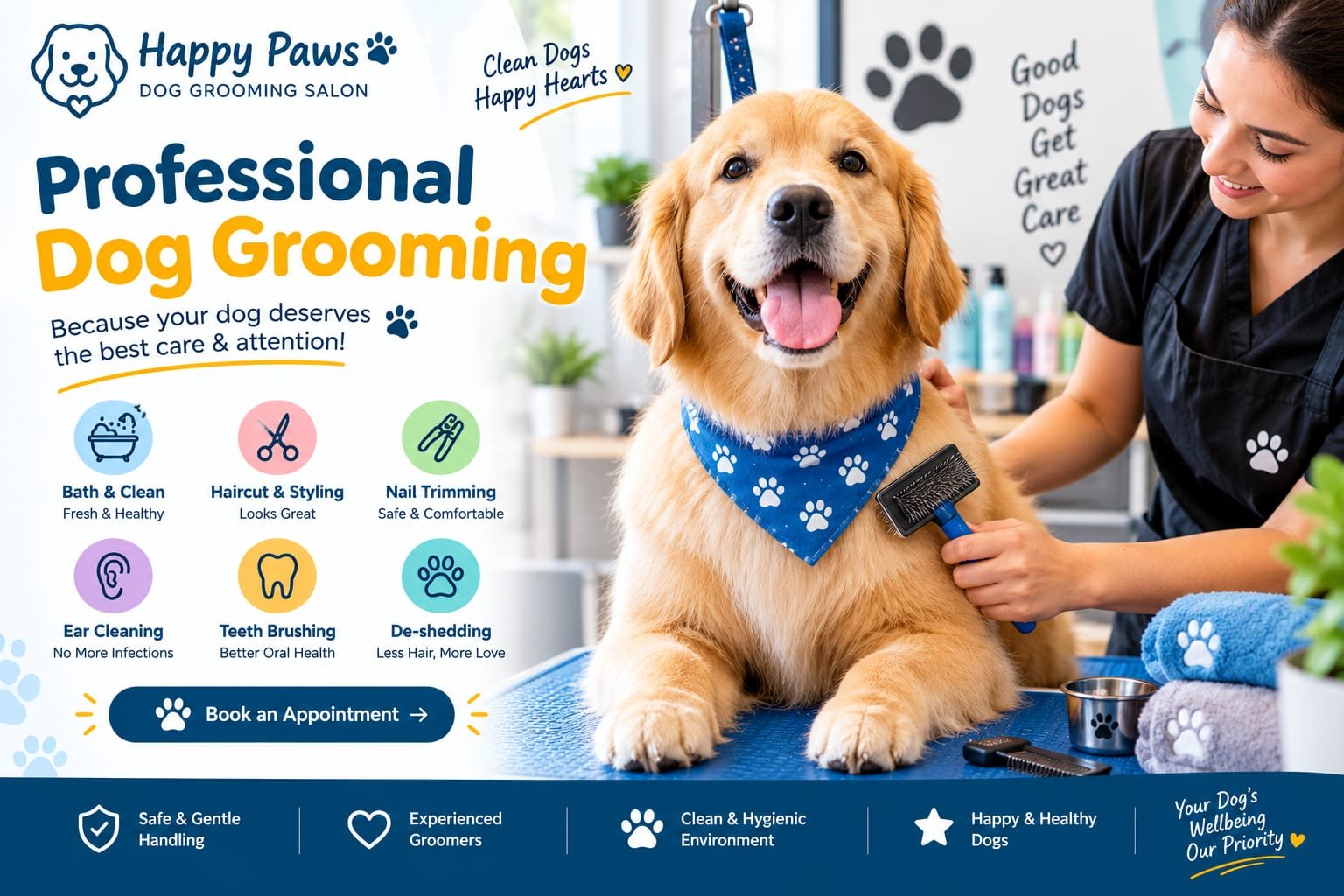
Brushing is one of the most important parts of Dog Grooming. It removes loose hair, spreads natural oils across the coat, and helps you notice tangles, skin irritation, or small objects caught in the fur.
Start in a quiet place where your dog feels safe. Let your pet sniff the brush before you begin. Use gentle strokes and work in small sections, following the coat’s natural direction when appropriate. Pay attention to areas where tangles commonly develop, such as behind the ears, beneath the legs, and around the tail.
If your dog has a knot, do not pull hard. Gently loosen only what can be removed without causing discomfort. Stop if the skin becomes red or your dog shows signs of pain. Tight mats may require help from a trained groomer or veterinarian.
Reward calm behavior with praise and suitable treats. Gradually increase the length of each session as your dog becomes more comfortable.
Bathing Your Dog Safely
Bathing helps remove dirt, allergens, and odors from the coat. Before bathing, brush out loose hair and manageable tangles. Use lukewarm water and a shampoo designed specifically for dogs.
Wet the coat gradually and keep water and shampoo away from the eyes, nose, and inside of the ears. Follow the product instructions, rinse thoroughly, and dry your dog with a towel. Leftover shampoo can irritate the skin, so careful rinsing is important.
Avoid human shampoo unless a veterinarian specifically recommends a product for your dog. Human skin products may not be suitable for canine skin. If your dog has allergies, persistent dandruff, or another skin condition, ask your veterinarian about an appropriate bathing routine.
After bathing, keep your dog warm until completely dry. If you use a hair dryer, choose a low, comfortable setting, keep it moving, and never direct hot air onto one area of skin.
Nail Trimming and Paw Care
Long nails can affect how a dog places its feet and may become uncomfortable. Check your dog’s nails regularly, especially if they do not naturally wear down during walks.
Introduce nail clippers slowly. Handle your dog’s paws gently and reward calm behavior. Trim only small amounts at a time, avoiding the quick, which contains blood vessels and nerves. On light-colored nails, the quick may be easier to see; on dark nails, it can be difficult to identify.
If you are unsure how to trim nails safely, ask a veterinarian or professional groomer to demonstrate. Never force a frightened dog to continue if it is struggling.
Paw care also includes checking the pads for cuts, irritation, trapped debris, or excessive licking. After outdoor walks, gently clean muddy paws and check between the toes. Contact a veterinarian if you notice persistent limping, swelling, bleeding, or pain.
Ear, Eye, and Dental Hygiene
A complete Dog Grooming routine includes checking areas beyond the coat.
Ear care: Look for redness, discharge, swelling, or unusual odor. Clean only the parts recommended by your veterinarian using a suitable pet ear-cleaning product. Never insert cotton swabs or other objects deep into the ear canal.
Eye care: If there is minor dirt around the eyes, gently wipe the surrounding area with a clean, damp cloth. Do not use irritating products near the eyes. Squinting, cloudiness, marked redness, or unusual discharge should be assessed by a veterinarian.
Dental care: Regular brushing with a dog toothbrush and dog-safe toothpaste can help reduce plaque. Do not use human toothpaste, which may contain ingredients unsuitable for pets. Your veterinarian can recommend dental products and professional dental care when needed.
Professional Dog Grooming Services
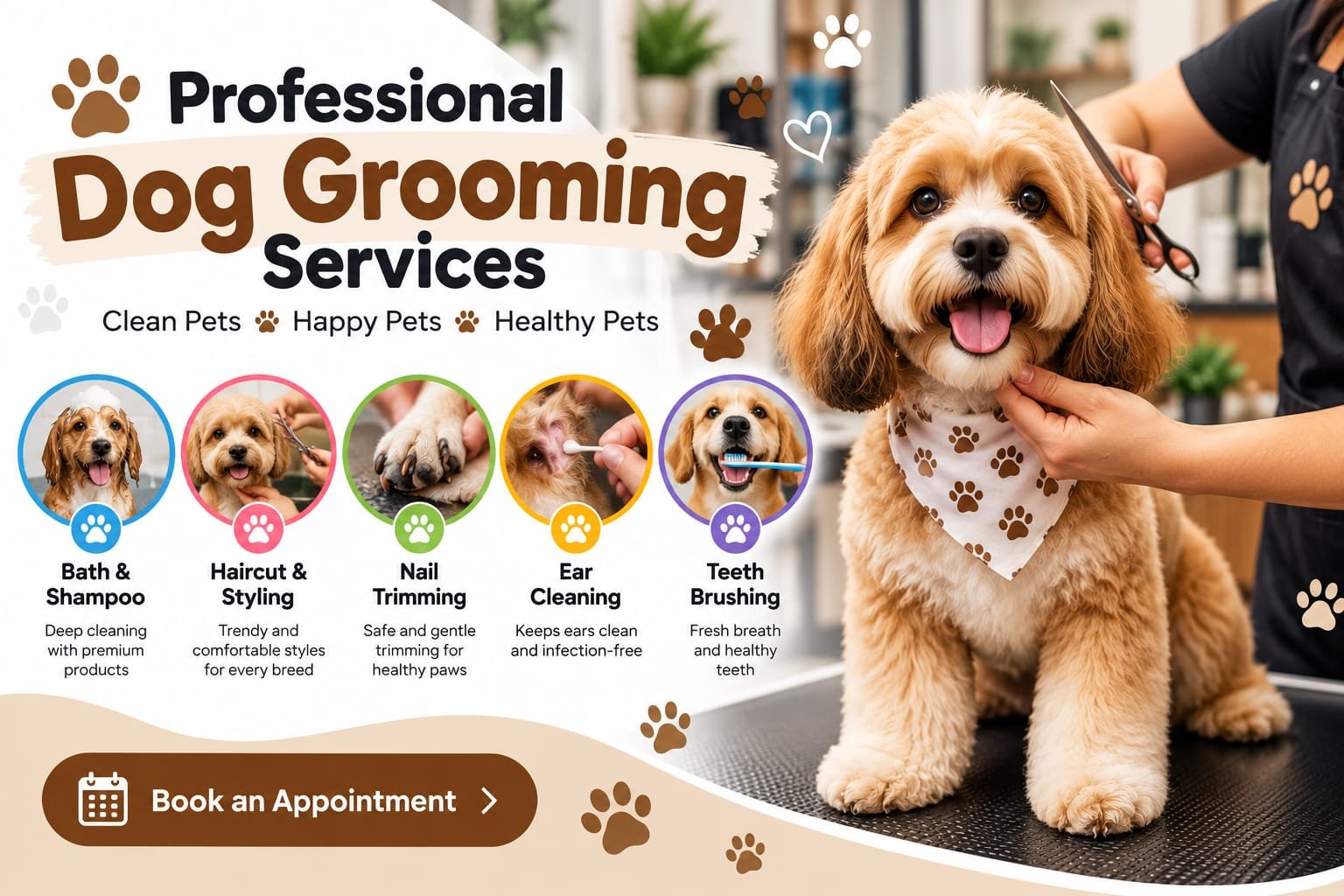
Some dogs benefit from professional Dog Grooming, particularly those with long, thick, or curly coats. Professional groomers can provide bathing, brushing, coat trimming, nail care, and other services suited to the dog’s needs.
When choosing a groomer, ask about their experience with your dog’s breed and temperament, cleaning practices, handling methods, and procedures for anxious pets. A good groomer should be willing to explain the process and discuss any concerns before beginning.
Tell the groomer about skin sensitivities, previous grooming difficulties, mobility issues, or areas your dog dislikes being touched. If your pet becomes very fearful or reactive, speak with your veterinarian about a gradual training plan and appropriate support.
Professional grooming does not mean every dog needs the same haircut. Some coats require specific techniques, and shaving certain double-coated dogs may affect coat appearance or growth. Discuss the best option for your dog’s individual coat.
Dog Grooming Tips for Puppies
Puppies benefit from gentle introductions to grooming. Begin with brief sessions that focus on positive experiences rather than completing every task at once.
Let your puppy become familiar with the brush, towel, nail-care tools, and the sound of grooming equipment before using them. Touch the paws, ears, and body gently, rewarding relaxed behavior. Keep the environment quiet and comfortable.
Never punish a puppy for being nervous. If your puppy tries to move away, take a break and make the next session easier. Positive, gradual practice can help reduce fear as your dog grows.
Puppies have delicate skin, so use suitable products and avoid unnecessary bathing. Ask your veterinarian when to begin particular grooming procedures and how to handle breed-specific coat needs.
Common Dog Grooming Mistakes to Avoid
Even caring owners can make mistakes when grooming their pets. Avoid these common problems:
- Bathing too frequently: Excessive bathing can dry or irritate some dogs’ skin.
- Using unsuitable products: Choose products designed for dogs and follow their instructions.
- Pulling tangled hair: Forceful brushing can cause pain and damage the skin.
- Cutting nails too short: Trimming too much can cause bleeding and discomfort.
- Ignoring skin changes: Persistent itching, redness, or hair loss may require veterinary assessment.
- Forcing a fearful dog: Rushing can increase stress and make future sessions harder.
- Forgetting dental and paw care: Grooming involves more than keeping the coat clean.
A calm routine and the right tools are more useful than trying to finish every task in one session.
How to Make Grooming Comfortable for Your Dog
A positive Dog Grooming experience starts with patience. Choose a time when your dog is relaxed and use a non-slip surface. Keep the first sessions short, speak calmly, and offer praise or small rewards for cooperative behavior.
Watch your dog’s body language. Turning away, repeatedly pulling the paw back, trembling, growling, or trying to escape may indicate fear, discomfort, or pain. Stop and reassess rather than forcing the procedure.
For dogs with severe grooming anxiety, sudden aggression, or sensitivity to touch, consult a veterinarian or qualified force-free trainer. Pain or illness can sometimes explain a new dislike of grooming.
Frequently Asked Questions About Dog Grooming
How often should I bathe my dog?
There is no single schedule for every dog. Bathing needs depend on coat type, activity, skin health, and veterinary advice. Use a dog-specific shampoo and avoid unnecessary baths.
Can I groom my dog at home?
Yes. Many owners can safely brush their dogs, bathe them when needed, check their paws, and maintain basic hygiene. Tasks such as complex haircuts or difficult nail trimming may be better handled by a professional.
Is professional grooming necessary for every dog?
Not always. Some dogs need only basic home care, while long-haired or curly-coated breeds may require regular professional trimming and maintenance.
What should I do if my dog hates grooming?
Start with very short sessions, introduce tools gradually, and reward calm behavior. Stop if your dog is distressed or appears to be in pain. Ask a veterinarian or qualified trainer for help if the problem continues.
When should I contact a veterinarian?
Seek veterinary advice for persistent itching, painful or irritated skin, unusual lumps, ear odor or discharge, eye problems, nail injuries, or sudden changes in grooming tolerance.
Conclusion: Build a Healthy Grooming Routine
Consistent Dog Grooming helps support your pet’s cleanliness, comfort, and everyday well-being. Brushing, appropriate bathing, careful nail maintenance, ear and eye checks, and dental hygiene all contribute to a useful grooming routine.
Every Dog Grooming is different, so adjust your approach to your pet’s coat, age, health, and temperament. Use dog-safe products, handle sensitive areas gently, and seek professional help whenever a task feels unsafe. With patience, positive reinforcement, and regular care, grooming can become a comfortable part of your dog’s routine and strengthen the bond you share.
Why Is Dog Grooming Important?