Contents
- 1. Introduction
- 2. What Is Dog Care and Daily Routine?
- 3. Why Dogs Need a Consistent Daily Schedule
- 4. Morning Routine for Your Dog
- 5. Feeding Your Dog at the Right Time
- 6. Exercise and Physical Activity
- 7. Grooming and Personal Hygiene
- 8. Training and Positive Behavior
- 9. Creating a Daily Schedule for Your Dog
- 10. Veterinary Care and Health Monitoring
- 11. Indoor Safety and a Comfortable Home
- 12. Adjusting Care for Puppies and Senior Dogs
- 13. Common Daily Care Mistakes to Avoid
- 14. How to Maintain a Routine With a Busy Schedule
- 15. Frequently Asked Questions
- 16. Conclusion
Introduction
Dogs are loyal companions that bring happiness, friendship, and Dog Care and Daily Routine comfort into our lives. However, responsible ownership requires more than providing food and shelter. Dogs need regular exercise, balanced nutrition, grooming, training, affection, and preventive veterinary care to enjoy a healthy and comfortable life.
Following a consistent Dog Care and Daily Routine helps pet owners Dog Care and Daily Routine understand their dogs’ needs and create a predictable environment. A well-planned schedule can support healthy habits, reduce boredom, encourage good behavior, and strengthen the bond between dogs and their families.
Every dog is different. Puppies, adult dogs, senior dogs, and dogs with specific medical needs may require different schedules. Breed, size, energy level, and temperament also influence daily care requirements.
This guide explains how to build a practical routine that supports your dog’s physical health, mental stimulation, comfort, and overall well-being.
What Is Dog Care and Daily Routine?
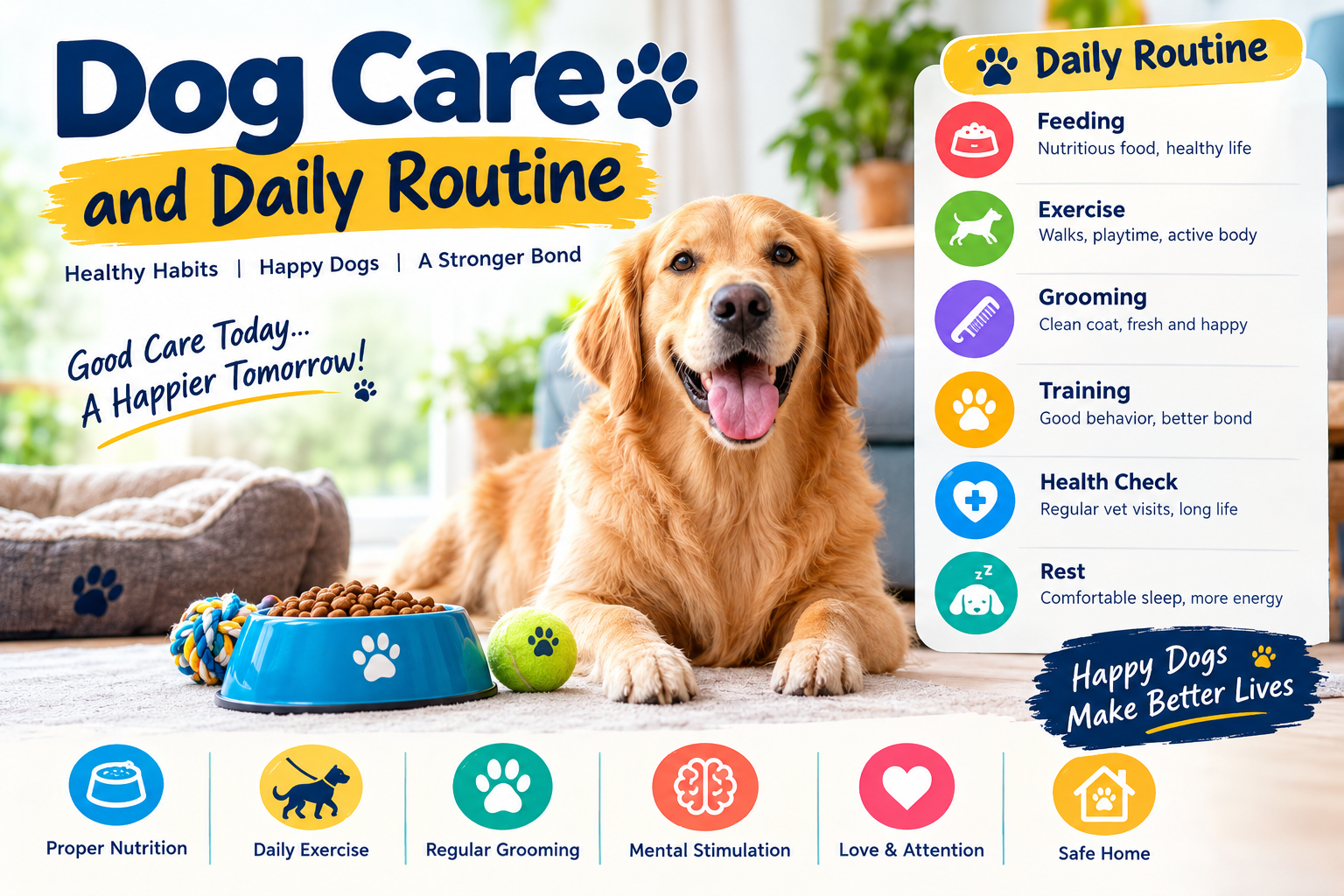
Dog Care and Daily Routine refers to the regular activities that help Dog Care and Daily Routine maintain a dog’s health, hygiene, comfort, and behavior. These activities include feeding, fresh water, bathroom breaks, walks, playtime, grooming, training, rest, and health monitoring.
A predictable schedule helps dogs understand what to expect throughout the day. For example, regular meal times and bathroom breaks may make daily life easier for both pets and owners.
A good routine should be flexible enough to accommodate changes in weather, work schedules, age, and health conditions. The objective is not to follow a strict timetable every minute but to provide consistent care that meets your dog’s individual needs.
Why Dogs Need a Consistent Daily Schedule
Dogs often feel more comfortable when their daily activities follow a Dog Care and Daily Routine familiar pattern. Consistency can help them adjust to household expectations and develop positive habits.
A suitable Dog Care and Daily Routine provides several benefits:
- Better physical health: Regular walks and appropriate activity help support mobility and fitness.
- Healthy eating habits: Consistent meal times make feeding easier to manage.
- Improved behavior: Training and enrichment can reduce boredom-related behaviors.
- Better hygiene: Regular grooming helps owners notice skin, coat, and nail problems.
- Emotional security: Predictable activities may help dogs feel more settled.
- Stronger relationships: Daily interaction builds trust between dogs and their owners.
Although routines are helpful, dogs should also have opportunities to Dog Care and Daily Routine explore, relax, and enjoy age-appropriate activities without unnecessary pressure.
Morning Routine for Your Dog
The morning is an excellent time to begin your dog’s daily schedule. Dog Care and Daily Routine After waking up, most dogs benefit from a bathroom opportunity, fresh water, and some suitable movement.
Start With a Bathroom Break
Take your dog outside or to its designated bathroom area soon after Dog Care and Daily Routine waking. Puppies may need more frequent bathroom breaks because they have less bladder control than adult dogs.
Reward appropriate bathroom behavior calmly and consistently. Avoid punishing accidents, as they may happen because of age, excitement, stress, or a medical problem.
Provide Fresh Water
Make sure clean drinking water is available. Wash the water bowl regularly and refill it with fresh water throughout the day.
Water needs can vary according to activity, temperature, diet, and health.Dog Care and Daily Routine Contact a veterinarian if your dog suddenly drinks much more or less than usual.
Plan a Morning Walk
Many dogs benefit from a morning walk suited to their age, breed, and physical condition. Walking provides movement, opportunities to explore smells, and exposure to everyday surroundings.
Start slowly if your dog is not accustomed to regular walks. Dog Care and Daily Routine Puppies and senior dogs may need shorter, gentler sessions, while energetic adult dogs may enjoy longer activities.
A thoughtful Dog Care and Daily Routine should always prioritize comfort and safety rather than forcing every dog to follow the same exercise schedule.
Feeding Your Dog at the Right Time
Nutrition is a central part of responsible pet ownership. Dog Care and Daily Routine Dogs need a balanced diet that supplies appropriate nutrients for their age, size, activity level, and health requirements.
Choose Appropriate Dog Food
Select a complete and balanced food formulated for your dog’s life stage. Puppy food, adult maintenance food, and senior-dog diets may have different nutritional characteristics.
Read the feeding instructions on the package and adjust Dog Care and Daily Routine portions according to your veterinarian’s guidance, especially if your dog has a medical condition or special dietary needs.
Maintain Consistent Meal Times
Many adult dogs do well with two meals each day, although individual requirements vary. Young puppies generally need more frequent meals. Follow veterinary guidance for puppies and dogs with specific nutritional needs.
Avoid suddenly changing your dog’s diet. When changing foods, Dog Care and Daily Routine a gradual transition over several days may help reduce digestive upset.
Limit Unhealthy Treats
Treats can be useful during training, but they should not replace balanced meals. Keep treats moderate and consider them when planning your dog’s overall food intake.
Never give dogs foods known to be dangerous, including chocolate, Dog Care and Daily Routine grapes, raisins, onions, garlic, or products containing xylitol. If your dog eats a potentially toxic food, contact a veterinarian promptly.
Exercise and Physical Activity
Regular physical activity supports a dog’s mobility, fitness, and mental well-being. The appropriate amount depends on age, breed, health, and energy level.
Daily Walks
Walking gives dogs an opportunity to move, investigate their surroundings, and experience new smells. Some dogs enjoy several shorter walks, while others benefit from a longer walk combined with indoor activities.
Use a secure leash in public areas and follow local rules. Avoid walking during extreme heat, and be cautious with hot pavement, icy surfaces, and unsafe terrain.
Playtime at Home
Games such as gentle fetch, supervised tug, and finding a favorite toy can provide enjoyable movement. Choose activities appropriate for your dog’s size, physical condition, and temperament.
Avoid excessive jumping or strenuous exercise for young puppies whose Dog Care and Daily Routine bodies are still developing. Dogs with joint problems or other health conditions may need modified activities recommended by a veterinarian.
Mental Stimulation
Physical exercise is only one part of a healthy lifestyle. Dogs also need opportunities to think, explore, and learn.
Puzzle feeders, scent games, reward-based training, and supervised exploration can provide mental enrichment. Rotate toys occasionally to maintain interest.
A balanced Dog Care and Daily Routine combines suitable physical activity with Dog Care and Daily Routine mental stimulation and sufficient rest.
Grooming and Personal Hygiene
Grooming keeps your dog comfortable and helps you identify potential health concerns. The frequency of grooming depends on coat type, skin condition, lifestyle, and breed.
Brush the Coat
Regular brushing can remove loose hair, reduce tangles, and help distribute natural skin oils. Long-haired dogs may need frequent brushing, while short-haired dogs often require less intensive grooming.
Use a brush designed for your dog’s coat. Work gently, especially around sensitive areas, and stop if brushing causes pain or distress.
Bathe When Necessary
Dogs do not all require the same bathing schedule. Bathing too frequently may dry or irritate some skin types, so choose a suitable dog shampoo and follow veterinary recommendations when skin problems are present.
Dry your dog thoroughly after bathing, particularly around skin folds and other areas that retain moisture.
Maintain Nail Health
Overgrown nails may affect comfortable walking. Check your dog’s nails regularly and trim them carefully with suitable equipment.
If you are unsure how to trim nails safely, ask a veterinary professional or experienced groomer to demonstrate the process.
Check Ears and Teeth
Look at your dog’s ears for unusual redness, discharge, odor, or discomfort. Avoid inserting objects deep into the ear canal.
Brush your dog’s teeth with pet-safe toothpaste and an appropriate toothbrush when possible. Never use human toothpaste unless a veterinarian specifically confirms that a product is safe for dogs.
Training and Positive Behavior
Training helps dogs learn household expectations, develop useful skills, and interact safely with people and other animals.
Practice Basic Commands
Teach useful cues such as sit, stay, come, leave it, and walking calmly on a leash. Keep training sessions short and enjoyable, particularly for puppies and dogs with limited attention spans.
Reward desired behavior with treats, praise, toys, or other rewards your dog enjoys.
Use Positive Reinforcement
Reward-based training encourages dogs to repeat desirable actions. Avoid harsh punishment, intimidation, or methods that cause fear or pain.
If a behavior becomes difficult to manage, consult a qualified trainer who uses humane methods or a veterinarian if the behavior may be related to pain or illness.
Socialization
Dogs benefit from positive, controlled experiences with different environments, sounds, people, and suitable animals. Introduce new experiences gradually and respect your dog’s comfort level.
Do not force interactions with unfamiliar dogs or people. A dog that appears frightened should be given space and a safe way to move away.
Creating a Daily Schedule for Your Dog
A sample timetable can help owners organize daily activities. Adjust the timing to suit your household, your dog’s needs, and veterinary advice.
| Time | Activity | Purpose |
|---|---|---|
| 7:00 AM | Bathroom break and fresh water | Start the day comfortably |
| 7:30 AM | Morning walk or suitable activity | Movement and exploration |
| 8:00 AM | Breakfast, if appropriate | Provide planned nutrition |
| 9:00 AM | Rest in a comfortable area | Recovery and relaxation |
| 12:00 PM | Bathroom break and brief interaction | Comfort and companionship |
| 1:00 PM | Puzzle toy or gentle enrichment | Mental stimulation |
| 4:00 PM | Walk or supervised play | Appropriate activity |
| 6:00 PM | Dinner, according to feeding plan | Maintain nutrition schedule |
| 7:00 PM | Calm family time and grooming checks | Bonding and care |
| 9:00 PM | Final bathroom opportunity | Prepare for overnight rest |
These times are examples, not universal requirements. Puppies may need more frequent bathroom opportunities and meals, while senior dogs may need shorter walks and easier access to outdoor areas.
A practical Dog Care and Daily Routine should fit the dog’s needs instead of requiring the dog to adapt to an unsuitable timetable.
Veterinary Care and Health Monitoring
Preventive healthcare is essential for maintaining a dog’s long-term well-being. Regular veterinary examinations can help identify problems before they become more serious.
Vaccinations and Parasite Prevention
Ask your veterinarian which vaccinations are appropriate for your dog’s age, lifestyle, and location. Fleas, ticks, and intestinal parasites may also require preventive treatment.
Never use a medication intended for another animal or change a prescribed treatment without professional guidance.
Monitor Changes in Behavior
Pay attention to changes in appetite, thirst, energy, walking, sleeping, bathroom habits, and social behavior.
Contact a veterinarian if you notice persistent changes or symptoms that concern you. Difficulty breathing, collapse, suspected poisoning, and other severe or rapidly developing symptoms require urgent veterinary attention.
Maintain Health Records
Keep records of vaccinations, medications, veterinary visits, allergies, and relevant medical instructions. This information can help you provide consistent care and communicate accurately with veterinary professionals.
Indoor Safety and a Comfortable Home
Your home should provide a safe place where your dog can eat, sleep, play, and relax.
Remove access to hazardous foods, household chemicals, medications, sharp objects, and small items that could be swallowed. Store rubbish securely and keep electrical cables away from chewing.
Provide a comfortable sleeping area in a quiet location. Dogs should also have access to shade, suitable indoor temperatures, and fresh water.
If your dog spends time in a fenced outdoor area, inspect the fence regularly and remove hazards. Never leave a dog unattended in a hot vehicle.
For more guidance, visit the American Veterinary Medical Association, which provides pet-owner resources about responsible animal care.
Adjusting Care for Puppies and Senior Dogs
Dogs’ needs change as they grow older. Their daily activities should reflect their stage of life.
Puppies
Puppies need frequent bathroom breaks, age-appropriate food, safe socialization, short training sessions, and plenty of sleep.
Avoid overwhelming a puppy with long periods of exercise or too many new experiences at once. Follow veterinary advice about vaccination schedules and safe opportunities to explore the world.
Adult Dogs
Healthy adult dogs often benefit from predictable meals, regular walks, training reinforcement, play, grooming, and routine veterinary care.
However, adult dogs vary considerably in energy levels. Match exercise to the individual dog rather than assuming that every adult needs the same amount.
Senior Dogs
Older dogs may develop changes in mobility, vision, hearing, or stamina. Provide comfortable bedding, nonslip surfaces, easy access to water, and manageable bathroom arrangements.
Senior dogs may benefit from more frequent veterinary assessments, depending on their health. Shorter walks and gentle enrichment can help maintain engagement without causing unnecessary strain.
Common Daily Care Mistakes to Avoid
Even well-intentioned owners sometimes overlook important details.
Inconsistent feeding: Frequently changing meal times or portions may make feeding management difficult.
Insufficient exercise: Too little appropriate activity may contribute to boredom and restlessness.
Excessive exercise: Strenuous activity can be unsuitable for puppies, senior dogs, or dogs with certain health conditions.
Neglecting dental care: Poor oral hygiene can contribute to dental disease and discomfort.
Ignoring warning signs: Changes in behavior, appetite, or mobility may indicate a problem requiring veterinary attention.
Using unsafe foods or products: Some common household items and human foods can be dangerous to dogs.
Leaving dogs without enrichment: Dogs need social interaction, suitable stimulation, and opportunities to rest.
Reviewing these habits can help make Dog Care and Daily Routine more effective and sustainable for the entire household.
How to Maintain a Routine With a Busy Schedule
Work, school, family responsibilities, and other commitments can make pet care challenging. Planning ahead helps ensure that essential needs are not overlooked.
Prepare meals according to your dog’s feeding plan, keep walking equipment accessible, and schedule grooming and veterinary appointments in advance.
If you are away for long periods, consider help from a trusted family member, responsible pet sitter, or suitable dog-walking service. Puppies and dogs that cannot comfortably remain alone for extended periods may need additional supervision.
Use a simple checklist to track feeding, bathroom breaks, exercise, medication when prescribed, and grooming. The checklist should support care rather than replace attention to your dog’s behavior and needs.
Consistency matters more than creating a complicated schedule that is difficult to maintain.
Frequently Asked Questions
How many times should I walk my dog each day?
Many dogs benefit from multiple opportunities to walk and use the bathroom each day. The ideal frequency and duration depend on age, health, breed, energy level, and weather conditions.
Should I feed my dog at the same time every day?
Regular feeding times can make daily care more predictable. Dog Care and Daily Routine Follow an appropriate feeding plan based on your dog’s age, nutritional needs, and veterinary advice.
How much sleep do dogs need?
Sleep requirements vary with age, activity, and individual characteristics. Puppies and senior dogs often need more sleep than healthy adult dogs. Provide a comfortable, quiet place where your dog can rest.
How often should I groom my dog?
Grooming frequency depends on coat type, skin condition, and lifestyle. Brushing, nail checks, dental care, and occasional bathing should be adjusted to your dog’s needs.
Can I change my dog’s routine?
Yes. Changes may be necessary because of work, travel, weather, Dog Care and Daily Routine or health needs. Introduce ordinary schedule changes gradually when practical, while maintaining access to food, water, bathroom opportunities, exercise, and rest.
Conclusion
Providing consistent care is one of the most important responsibilities of dog ownership. Feeding, exercise, grooming, training, veterinary attention, and a safe home all contribute to a dog’s quality of life.
A well-designed Dog Care and Dog Care and Daily Routine Daily Routine helps owners organize these responsibilities and recognize when their pets need additional support. However, no single schedule is suitable for every dog. Age, health, temperament, breed, and individual preferences should guide daily decisions.
Start with a manageable plan, observe how your dog responds, Dog Care and Daily Routine and make adjustments when necessary. With patience, consistency, and appropriate veterinary guidance, you can build healthy habits that support your dog’s comfort and happiness throughout life.