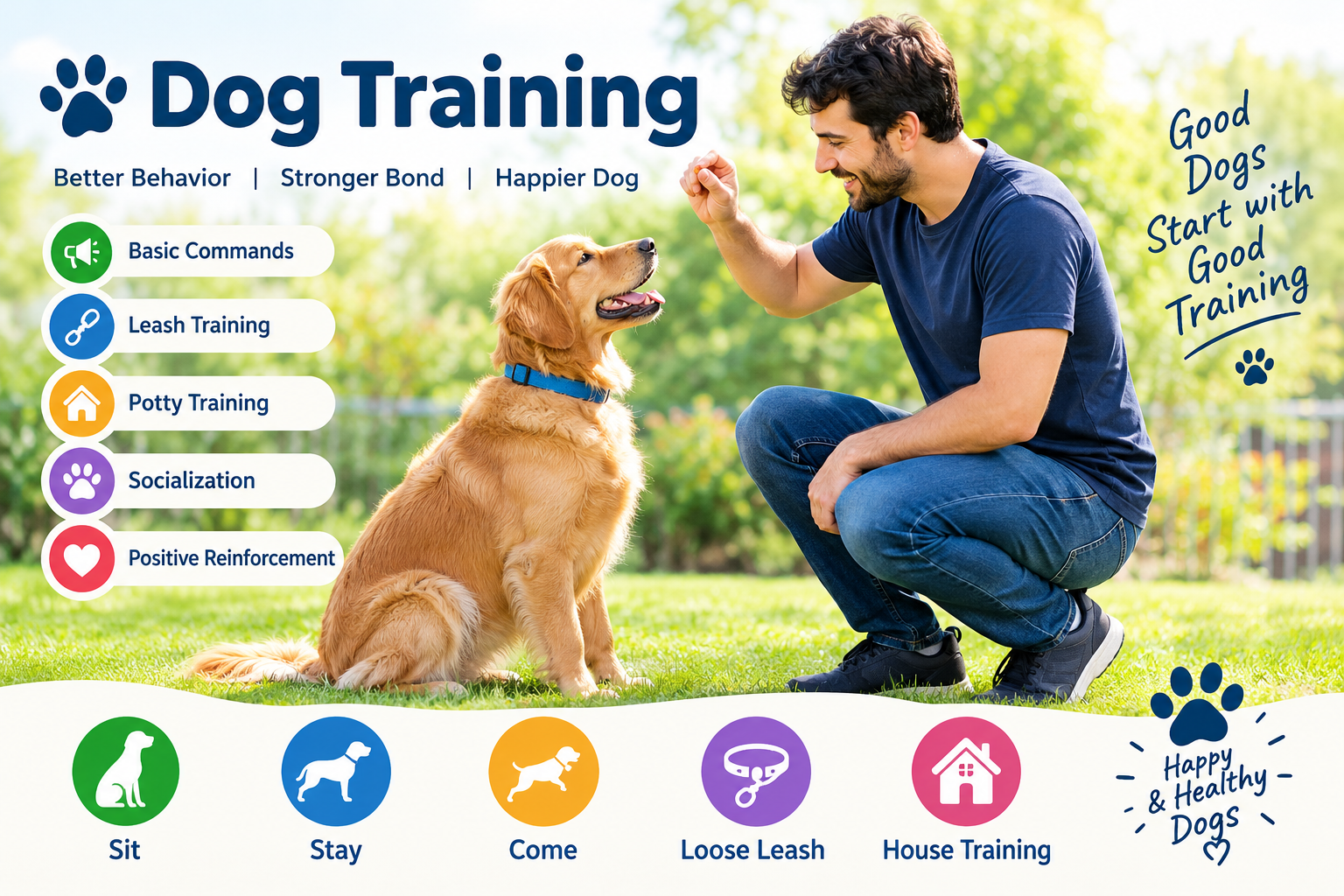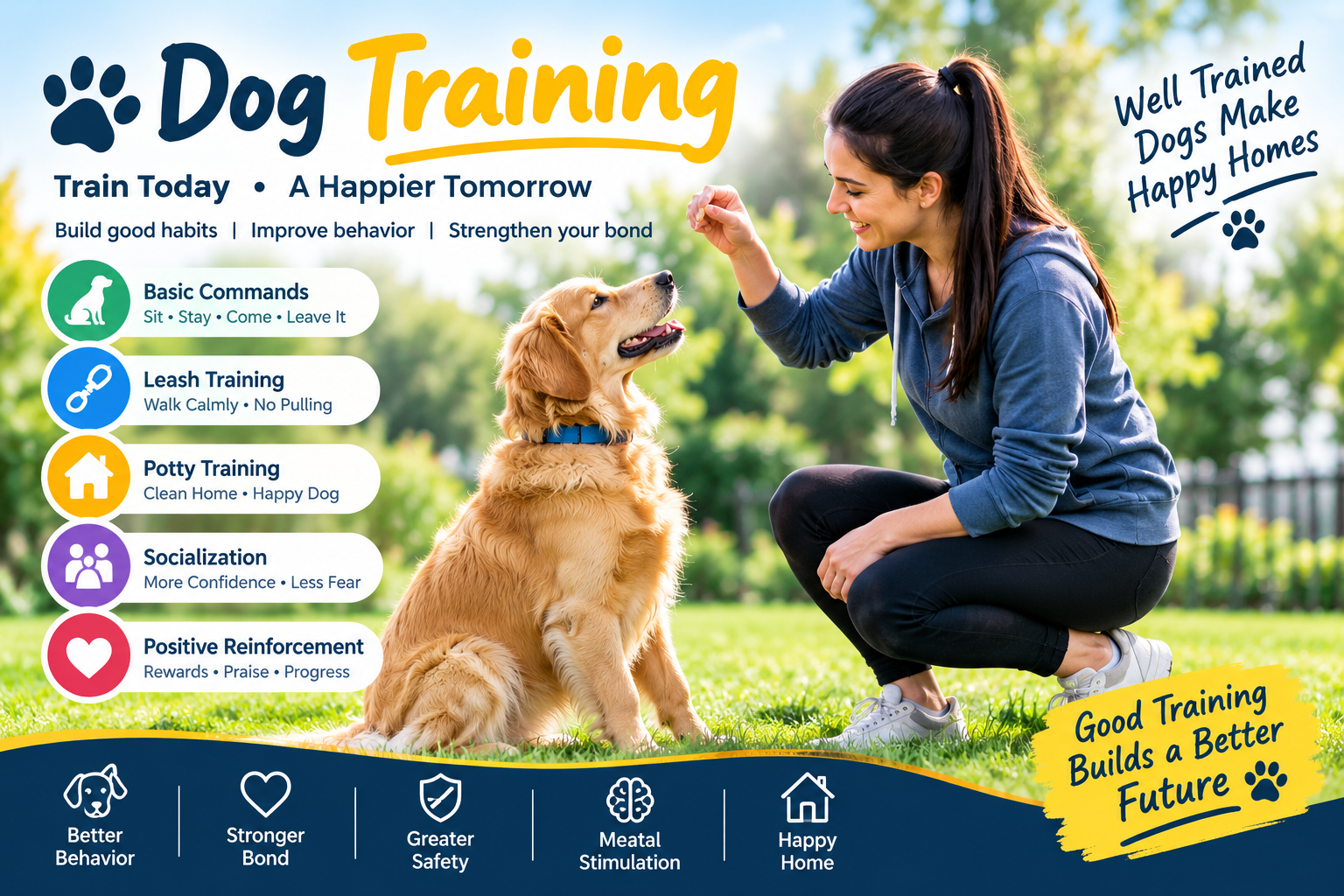
Dog training is an important part of raising Dog Training a happy, healthy, and well-behaved companion. Whether you have a young puppy or an Dog Training adult dog, the right training methods can Dog Training help your pet learn good habits, follow basic commands, and feel more confident in everyday situations. Training also strengthens the bond between dogs and their owners by Dog Training building trust, communication, and mutual understanding.
Every dog has a unique personality, learning style, and energy level. Some dogs learn new commands quickly, while others need more time Dog Training and practice. With patience, consistency, and positive reinforcement, you can help your dog develop skills that make daily life easier and more enjoyable.
Contents
- 1. What Is Dog Training?
- 2. Why Is Dog Training Important?
- 3. When Should You Start Training Your Dog?
- 4. Start With Basic Dog Training Commands
- 5. Use Positive Reinforcement Techniques
- 6. How to Potty Train Your Dog
- 7. Leash Training and Walking Manners
- 8. Socialization and Good Behavior
- 9. How to Stop Unwanted Dog Behaviors
- 10. Create a Simple Daily Dog Training Routine
- 11. Common Dog Training Mistakes to Avoid
- 12. When to Seek Professional Dog Training Help
- 13. Frequently Asked Questions About Dog Training
- 14. Conclusion
- 15. Why Is Dog Training Important?
What Is Dog Training?
Dog training is the process of teaching dogs how to respond to commands, behave Dog Training appropriately, and understand household rules. It includes basic obedience, house training, leash walking, socialization, and more advanced skills.
Effective Dog Training training does not rely on fear or punishment. Instead, it focuses on rewarding desirable behavior and guiding dogs toward better choices. Dog Training Rewards may include small treats, praise, toys, or playtime.
The goal of dog training is not simply to make a dog obey commands. It is also to help your pet feel secure, understand expectations, and behave safely around people and other animals.
Why Is Dog Training Important?
Training provides several benefits for both dogs and their owners. A trained dog is often easier to manage at home, during walks, and when visiting new places.
Here are Dog Training some important benefits of training:
- Better communication: Dogs learn to understand familiar words, signals, and expectations.
- Improved safety: Commands such as “come,” “stay,” and “leave it” can help prevent dangerous situations.
- Good manners: Training can reduce jumping on visitors, pulling on the leash, and other unwanted habits.
- Mental stimulation: Learning Dog Training new skills gives dogs a useful activity and keeps them engaged.
- Stronger relationships: Positive training builds trust between dogs and their families.
- Easier daily routines: Dogs can learn where to sleep, when to eat, and where to go to the bathroom.
Regular practice helps reinforce these benefits over time.
When Should You Start Training Your Dog?
You can begin Dog Training teaching simple habits as soon as your puppy comes home. Young puppies can start learning their names, following simple cues, and becoming familiar with household routines. Keep early sessions short, gentle, and enjoyable.
Adult and older dogs can also learn new behaviors. It is never too late to introduce useful commands or improve existing habits. However, dogs that have practiced a behavior for a long time may need additional patience and repetition.
Start with simple lessons and gradually increase the difficulty. Avoid expecting your dog to Dog Training master several commands in one session. Consistent practice is more effective than overwhelming your pet with too much information.
Start With Basic Dog Training Commands
Basic commands provide a strong foundation for everyday obedience. Teach one command Dog Training at a time and practice in a quiet environment before introducing distractions.
1. Sit
The “sit” command helps your dog learn to settle before meals, walks, or greetings. Dog Training Hold a small treat near your dog’s nose and slowly move it upward. As your dog follows the treat, its bottom may naturally lower toward the floor.
Once your Dog Training dog sits, say “sit,” reward the behavior, and offer praise. Repeat the exercise in short sessions until your dog begins responding to the verbal cue.
2. Stay
The “stay” command teaches your dog to remain in one place until released. Ask your dog to sit, show an open hand, and say “stay.” Initially, wait only a moment before rewarding your dog.
Gradually increase the duration and distance as your dog becomes more comfortable. If your dog moves, calmly reset the exercise and Dog Training make the next attempt easier.
3. Come
The “come” command is especially useful when calling your dog away from distractions. Begin indoors or in a securely enclosed area. Say your dog’s name followed by “come” in a friendly voice.
When your dog approaches, reward it generously with praise, Dog Training treats, or a favorite toy. Avoid using the command to call your dog for something unpleasant, because this may weaken its positive association with coming to you.
4. Leave It
“Leave it” teaches dogs to move away from something they should not touch. Start with a low-value object and reward your dog for turning its attention toward you instead.
Practice gradually and keep unsafe items out of reach. This command can support safer behavior, but it should never replace appropriate supervision.
Use Positive Reinforcement Techniques
Positive reinforcement is one of the most useful approaches to dog training. It involves rewarding a behavior you want your dog to repeat.
For example, if your dog sits quietly instead of jumping on a visitor, reward the calm behavior. If your dog walks beside you without pulling, offer praise or a small treat.
Useful rewards include:
- Small, dog-safe treats.
- Verbal praise in a cheerful voice.
- Favorite toys.
- Short play sessions.
- Gentle attention when your dog enjoys it.
Choose rewards that motivate your individual dog. Keep treats small, consider your dog’s dietary needs, and account for training treats in its daily food intake.
Avoid hitting, frightening, or intimidating your dog. Harsh methods can create stress and may worsen unwanted behaviors. If your dog becomes confused, reduce the difficulty and reward small steps toward success.
How to Potty Train Your Dog
House training helps your dog learn where and when to relieve itself. A predictable routine is especially helpful for puppies.
Take your dog outside after waking up, eating, drinking, playing, and before bedtime. Puppies may need frequent bathroom breaks because they have limited bladder control.
Choose a consistent outdoor spot and reward your dog immediately after it finishes there. Use the same exit and route when practical so the routine becomes familiar.
Watch for signs such as sniffing the floor, circling, or suddenly moving away from an activity. These may indicate that your dog needs a bathroom break.
Accidents can happen during the learning process. Clean the area thoroughly with an appropriate pet-safe cleaner and avoid punishment. If accidents continue suddenly or occur alongside other symptoms, consult a veterinarian to rule out medical causes.
Leash Training and Walking Manners
Leash training helps make walks more comfortable and controlled. Begin by allowing your dog to become familiar with a properly fitted collar or harness and leash in a calm environment.
Reward your dog for walking near you with a loose leash. If your dog pulls, stop moving or change direction when it is safe to do so. Resume walking when the leash becomes loose.
Keep early walks short enough to match your dog’s age, health, and energy level. Puppies and dogs that are not used to walking outdoors may need gradual introductions to traffic sounds, unfamiliar surfaces, bicycles, and other distractions.
Never drag your dog toward something that frightens it. Give your pet enough distance to feel safe and introduce new experiences gradually.
Socialization and Good Behavior
Socialization helps dogs become comfortable with different people, environments, sounds, surfaces, and suitable animal companions.
For puppies, early positive experiences are particularly valuable. Introduce new situations gradually and use safe, age-appropriate experiences recommended by your veterinarian. Avoid exposing puppies to unnecessary disease risks before their vaccinations and preventive care are appropriately managed.
Adult dogs also benefit from careful socialization. Let your dog approach new experiences at its own pace, and reward relaxed behavior.
Do not force interactions with unfamiliar dogs or people. A dog that turns away, hides, stiffens, or repeatedly tries to escape may need more space. Respecting these signals helps build confidence and supports safer interactions.
How to Stop Unwanted Dog Behaviors
Many common behavior problems can improve with consistent training and by identifying what causes them.
Excessive Barking
Dogs bark to communicate, respond to sounds, seek attention, or express excitement and concern. Observe what happens immediately before the barking begins.
Reward quiet moments and teach an alternative behavior, such as going to a mat. If barking is persistent or linked to fear, consider seeking help from a qualified, reward-based trainer.
Jumping on People
Some dogs jump because they want attention. Teach your dog to greet people with four paws on the floor. Reward calm greetings and ask visitors to avoid encouraging jumping.
Chewing Household Items
Chewing is a normal behavior, particularly for puppies. Provide appropriate chew toys and keep shoes, cables, and other unsafe objects out of reach. Praise your dog when it chooses an appropriate item.
Pulling on the Leash
Reward your dog for staying near you and walking with a loose leash. Practice in low-distraction areas before moving to busy locations. If pulling is difficult to manage, a qualified trainer can help you develop a suitable plan.
Create a Simple Daily Dog Training Routine
Short, regular sessions can help your dog learn without becoming overwhelmed. Adjust the routine according to your dog’s age, health, attention span, and activity needs.
A simple routine may include:
- Morning: Practice name recognition, “sit,” or “come” for a few minutes.
- After meals: Follow a predictable bathroom routine and reward successful outdoor trips.
- Afternoon: Practice loose-leash walking or introduce a new household skill.
- Evening: Review familiar commands and reward calm behavior.
- Throughout the day: Encourage good manners during ordinary activities.
Several brief sessions may work better than one long lesson. End on a positive note whenever possible, and allow your dog enough time for rest, exercise, and play.
Common Dog Training Mistakes to Avoid
Even caring owners can make mistakes when teaching new skills. Recognizing these problems can help you make training more effective.
Inconsistent commands: Using different words for the same behavior may confuse your dog. Agree on consistent cues with everyone in the household.
Expecting quick results: Learning takes time. Repeat lessons regularly and celebrate gradual progress.
Training with too many distractions: Start in a quiet space and introduce distractions gradually.
Punishing mistakes: Fear and confusion can interfere with learning. Instead, redirect your dog and reward the behavior you want.
Skipping practice: Skills can weaken without reinforcement. Include short reviews in your daily routine.
Ignoring health concerns: Pain, hearing changes, anxiety, or other medical problems can affect behavior. Consult a veterinarian if your dog’s behavior changes suddenly or seems unusual.
When to Seek Professional Dog Training Help
Some dogs need additional support, especially when their behavior involves intense fear, aggression, persistent anxiety, or difficulty coping with everyday situations.
Choose a qualified trainer who uses humane, reward-based methods and explains the training process clearly. Ask about relevant experience, qualifications, and how the trainer handles challenging behavior.
If your dog growls, snaps, or shows signs of serious distress, do not punish warning signals or force close contact. Create distance, manage the environment safely, and seek guidance from a veterinarian or an appropriately qualified behavior professional.
A professional can help identify the underlying cause and develop a plan suited to your dog’s needs.
Frequently Asked Questions About Dog Training
How long does dog training take?
The time required depends on the dog’s age, temperament, previous experiences, and the skill being taught. Some simple commands may develop within days, while reliable behavior around distractions can take weeks or months of consistent practice.
Can older dogs learn new commands?
Yes. Older dogs can learn new skills and routines. Keep lessons comfortable, use motivating rewards, and account for any mobility, hearing, or health limitations.
How many minutes should I train my dog each day?
Start with short sessions of a few minutes and adjust according to your dog’s attention and comfort. Several brief sessions spread throughout the day may be more effective than one lengthy session.
What is the best way to reward a dog?
Use rewards your dog enjoys, such as small treats, praise, toys, or play. Deliver the reward promptly after the desired behavior so your dog can connect the two.
Should I train my dog at home or attend classes?
Both options can be helpful. Home practice supports daily habits, while suitable training classes provide structured lessons and controlled opportunities to practice around distractions. Choose the approach that fits your dog’s needs and comfort level.
Conclusion
Dog training is an ongoing process that helps dogs become confident, comfortable, and better prepared for everyday life. By teaching basic commands, developing good leash manners, establishing bathroom routines, and encouraging positive social experiences, you can build a strong foundation for lifelong learning.
The most Dog Training important ingredients are patience, consistency, supervision, and positive reinforcement. Every dog learns at a different pace, so focus on steady progress instead of perfection.
With thoughtful practice and an understanding of your dog’s individual needs, training can become an enjoyable activity that strengthens your relationship and supports a happier life together.
Why Is Dog Training Important?