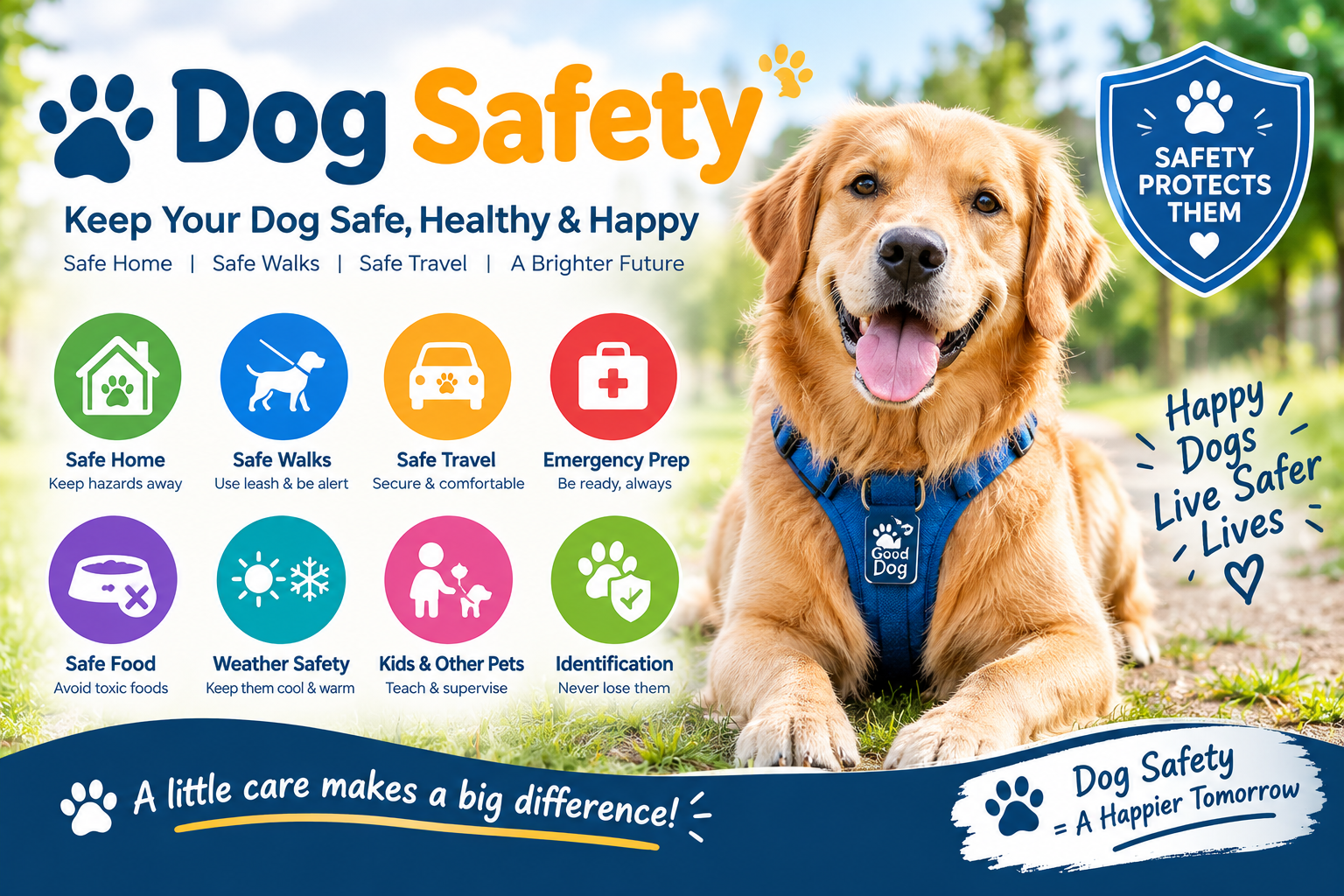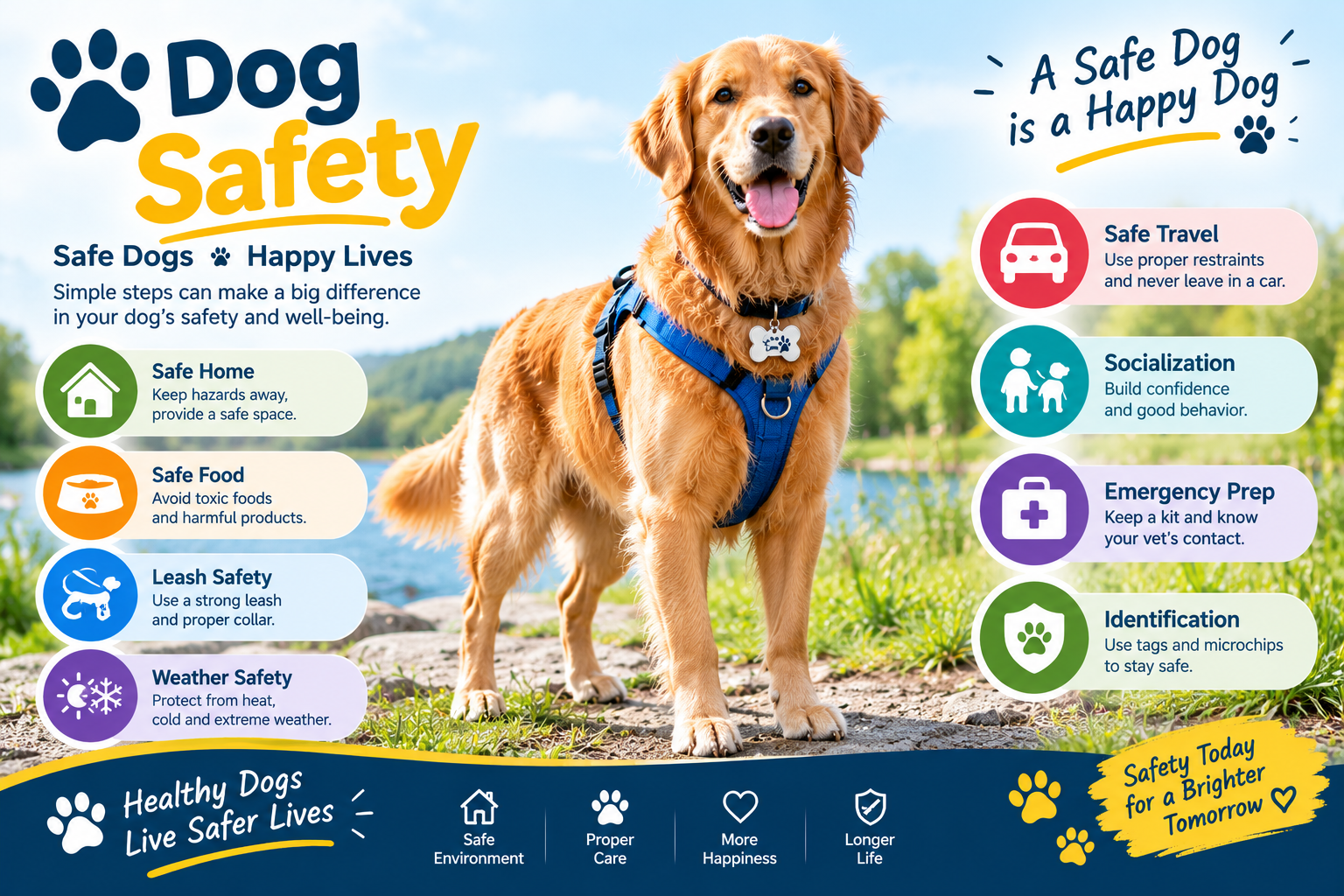
Dog safety is an important part of responsible pet ownership. Dogs bring companionship, Dog Safety happiness, Dog Safety and love into our lives, but they also depend on their owners to protect them from everyday hazards. Whether you have a playful puppy or an adult dog, creating a safe environment can help prevent accidents, injuries, and unnecessary stress.
Understanding dog safety means knowing how to protect your pet Dog Safety at home, outdoors, during walks, and while traveling. It also involves providing proper supervision, regular veterinary care, suitable identification, and training. With a few practical precautions, you can help your dog enjoy Dog Safety a healthier and more comfortable life.
Contents
- 1. Why Is Dog Safety Important?
- 2. How to Create a Safe Home for Your Dog
- 3. Keep Toxic Foods and Household Products Away
- 4. Dog Safety During Walks
- 5. Protect Your Dog From Hot and Cold Weather
- 6. Dog Safety Around Children and Other Pets
- 7. Safe Car Travel With Your Dog
- 8. Identification and Outdoor Safety
- 9. Basic Training for Better Dog Safety
- 10. Prepare a Dog Emergency Kit
- 11. Recognize Signs That Your Dog Needs Help
- 12. Daily Dog Safety Checklist
- 13. Frequently Asked Questions About Dog Safety
- 14. Conclusion
Why Is Dog Safety Important?
Dog safety helps protect pets from common household hazards, road accidents, harmful substances, extreme weather, and unexpected situations. Dogs are naturally curious, so they may chew unfamiliar objects, explore Dog Safety unsafe areas, or approach other animals without understanding the risks.
Preventive care is often easier than dealing with an emergency. Keeping dangerous items out of reach, supervising Dog Safety outdoor activities, and teaching basic commands can make everyday Dog Safety life safer for your pet.
Dog safety also includes emotional well-being. Dogs need a calm environment, positive interactions, enough rest, and Dog Safety opportunities to exercise. A dog that feels secure is more likely to develop confidence and healthy behavior.
How to Create a Safe Home for Your Dog
Your home should provide a comfortable place where your dog can relax, sleep, eat, and play without unnecessary risks.
Start by checking each room for hazards. Keep electrical cables, sharp objects, cleaning products, Dog Safety medications, and small items out of reach. Secure rubbish bins because discarded food and packaging may cause problems if swallowed.
Use safety gates when necessary to keep your dog away from stairs, kitchens, storage rooms, or other areas that are not suitable for unsupervised access. Dog Safety
Choose a comfortable bed in a quiet location. Make sure your dog always has access to fresh drinking water and a suitable resting area.
Inspect toys regularly for broken pieces or loose parts. Select toys that are appropriate for your dog’s size and chewing habits, and supervise play with items that could break Dog Safety or be swallowed.
Keep Toxic Foods and Household Products Away
Some foods and everyday products that are safe for humans can be dangerous for dogs. Store them Dog Safety securely and never assume that a small amount is harmless.
Common hazards include:
- Chocolate and products containing cocoa.
- Grapes and raisins.
- Products containing xylitol, an artificial sweetener found in some sugar-free foods.
- Onions and garlic.
- Alcohol and Dog Safety caffeinated drinks.
- Human medications and unsuitable supplements.
- Household cleaners, pesticides, and certain garden chemicals.
The level of risk depends on the substance, amount, and size of the dog. If you suspect your dog has swallowed something harmful, contact a Dog Safety veterinarian or an animal poison advice service immediately. Do not wait for symptoms to appear or try home treatments without professional guidance.
Keep Dog Safety product labels available so you can tell the veterinarian exactly what your dog may have consumed.
Dog Safety During Walks
Daily walks provide exercise, mental stimulation, and opportunities to explore. However, busy roads, unfamiliar dogs, broken glass, and extreme temperatures can create risks. Dog Safety
Use a well-fitted collar or harness and a sturdy leash that suits your dog’s size and strength. Check the equipment regularly for damage, loose buckles, or worn straps.
Walk your dog in suitable areas and keep it away from moving traffic. Teach basic commands such as “come,” “stay,” and “leave it” to improve communication. Training supports safety, but it does not replace a leash or close supervision near roads.
During walks, watch where your dog steps and prevent it from eating unknown food, rubbish, or objects from the ground.
Choose quieter walking routes if your dog becomes frightened by crowds, traffic, or other animals. Give unfamiliar dogs plenty of space and ask their owners before allowing an interaction.
Protect Your Dog From Hot and Cold Weather
Weather conditions can affect dogs more quickly than many owners expect. Planning outdoor activities around the temperature can help prevent serious health problems.
Hot Weather Safety
High temperatures can cause overheating and heatstroke, especially in dogs that are exercising, have breathing difficulties, or cannot find shade.
Provide fresh water and access to a cool, shaded place. Avoid strenuous exercise during the hottest part of the day and choose cooler morning or evening periods when appropriate.
Never leave your dog alone in a parked car, even if the windows are partly open. Vehicle temperatures can rise rapidly and become dangerous.
Watch for excessive panting, weakness, confusion, vomiting, or collapse. These signs can indicate heat-related illness and require urgent veterinary attention.
Cold Weather Safety
Cold weather can also create risks, particularly for small, short-haired, young, older, or unwell dogs.
Provide a warm, dry sleeping area and limit exposure when conditions become uncomfortable. Wipe your dog’s paws after walks where road salt, ice, or other irritating substances may be present.
Consider a properly fitted coat if your dog needs extra warmth, and avoid leaving pets outdoors for extended periods in severe weather.
Dog Safety Around Children and Other Pets
Dogs and children can develop wonderful relationships when interactions are managed carefully. However, even a friendly dog may become uncomfortable if it is startled, hurt, or disturbed while eating or sleeping.
Always supervise interactions between children and dogs. Teach children to approach calmly, avoid pulling ears or tails, and respect a dog’s resting space.
Never allow children to climb on a dog or take food, toys, or chews away from it. Give your dog a quiet place where it can retreat without being disturbed.
When introducing dogs to other pets, use controlled, gradual introductions. Keep enough distance to prevent tension and reward calm behavior. Do not force animals to interact if either appears frightened or uncomfortable.
If you notice stiff body posture, repeated attempts to move away, growling, or other signs of distress, calmly create more space. Consult a qualified, reward-based trainer or veterinary behavior professional if concerns continue.
Safe Car Travel With Your Dog
Travel safety is essential whether you are taking your dog to the veterinarian or going on a family trip.
Use a suitable travel crate, secured carrier, or crash-tested dog restraint appropriate for your vehicle and pet. Follow the manufacturer’s instructions to ensure the equipment is fitted correctly.
Keep your dog away from the driver’s area so it cannot interfere with steering, pedals, or visibility. Avoid allowing your dog to travel with its head outside an open window because flying debris and sudden movements can cause injuries.
For longer journeys, plan appropriate breaks for water, bathroom needs, and movement. Never leave your dog unattended in a parked vehicle during hot or cold weather.
Before traveling, check that your dog has identification and that your contact details are up to date.
Identification and Outdoor Safety
Even well-trained dogs can become lost if they are startled by loud noises, escape through an open gate, or slip out of their equipment.
Make sure your dog wears identification with current contact information. Microchipping can provide an additional way to identify your pet if it becomes separated from you. Keep the registration details updated after moving or changing phone numbers.
Inspect fences, gates, and outdoor enclosures for gaps or weak points. Do not assume that a low fence will contain every dog.
When visiting unfamiliar places, keep your dog close and check local leash rules. In open areas, only allow off-leash activity where it is permitted and genuinely safe. A secure, enclosed space is a better option when recall is not reliable.
Basic Training for Better Dog Safety
Training can help prevent dangerous situations and improve communication between dogs and their owners.
Teach your dog to respond to its name and practice essential cues such as “come,” “stay,” “sit,” and “leave it.” Reward desired behavior with treats, praise, or toys.
Introduce new skills gradually and practice in quiet places before adding distractions. Keep sessions short, positive, and consistent.
Avoid punishment-based methods that may create fear or confusion. If your dog reacts strongly to other dogs, people, or unfamiliar situations, seek advice from a qualified professional who uses humane training methods.
Remember that no command is completely reliable in every situation. Continue using appropriate supervision, leashes, barriers, and other safety measures.
Prepare a Dog Emergency Kit
Keeping essential supplies together can help you respond more effectively when an unexpected situation occurs.
A basic dog emergency kit may include:
- Your veterinarian’s contact details.
- Copies of important medical and vaccination records.
- A secure leash, collar, and identification information.
- Bottled water and a portable bowl.
- A small supply of your dog’s regular food.
- A pet first-aid kit recommended by your veterinarian.
- Towels, waste bags, and any prescribed medication.
Learn the location of the nearest veterinary emergency clinic before you need it. Ask your veterinarian how to handle common emergencies and which first-aid supplies are suitable for your dog.
Do not give human medication or attempt unfamiliar treatments unless a veterinary professional specifically advises you to do so.
Recognize Signs That Your Dog Needs Help
Knowing your dog’s normal behavior can help you recognize when something is wrong.
Warning signs may include unusual tiredness, repeated vomiting, difficulty breathing, sudden weakness, severe pain, unexplained swelling, or significant changes in behavior.
Some emergencies develop quickly. Difficulty breathing, collapse, suspected poisoning, major injuries, or signs of heatstroke require urgent veterinary attention.
Keep your dog calm and minimize unnecessary movement while arranging professional help. Avoid putting your hands near the mouth of a frightened or injured animal, because pain and fear can lead to an unexpected bite.
If you notice a sudden change in eating, drinking, movement, or behavior, contact your veterinarian for advice.
Daily Dog Safety Checklist
A simple daily checklist can help you maintain a safer routine for your pet.
- Check that fresh water is available.
- Make sure food and household chemicals are stored safely.
- Inspect your dog’s collar, harness, and leash.
- Check fences and gates before outdoor play.
- Provide appropriate exercise and mental stimulation.
- Supervise interactions with children and unfamiliar animals.
- Keep identification and veterinary information current.
- Provide a clean, comfortable place to rest.
These small habits can make dog safety a natural part of everyday pet care.
Frequently Asked Questions About Dog Safety
How can I keep my dog safe at home?
Remove toxic substances and small dangerous objects, secure rubbish bins, supervise play, and provide a comfortable resting area. Regularly inspect your home for new hazards.
Is it safe to leave my dog alone?
This depends on your dog’s age, health, temperament, and ability to remain comfortable alone. Introduce alone time gradually and ensure your dog has water, a safe environment, and suitable enrichment. Puppies and dogs with separation-related distress may need additional support.
What should I do if my dog eats something toxic?
Contact a veterinarian or animal poison advice service immediately. Keep the packaging or product details available, and do not induce vomiting or give home remedies unless instructed by a veterinary professional.
How can I make walks safer?
Use appropriate walking equipment, stay alert around traffic, avoid unknown substances on the ground, and maintain a safe distance from unfamiliar animals. Training and supervision should always work together.
Conclusion
Dog safety is an essential responsibility that helps protect your pet throughout its life. From creating a secure home and choosing safe walking routes to preventing poisoning and preparing for emergencies, small preventive actions can make a meaningful difference.
Every dog has different needs, so adapt your approach to its age, size, health, temperament, and environment. Combine positive training with regular veterinary care, suitable identification, and responsible supervision.
By making dog safety part of your daily routine, you can help your Dog Safety companion enjoy a safer, healthier, and happier life with your family.