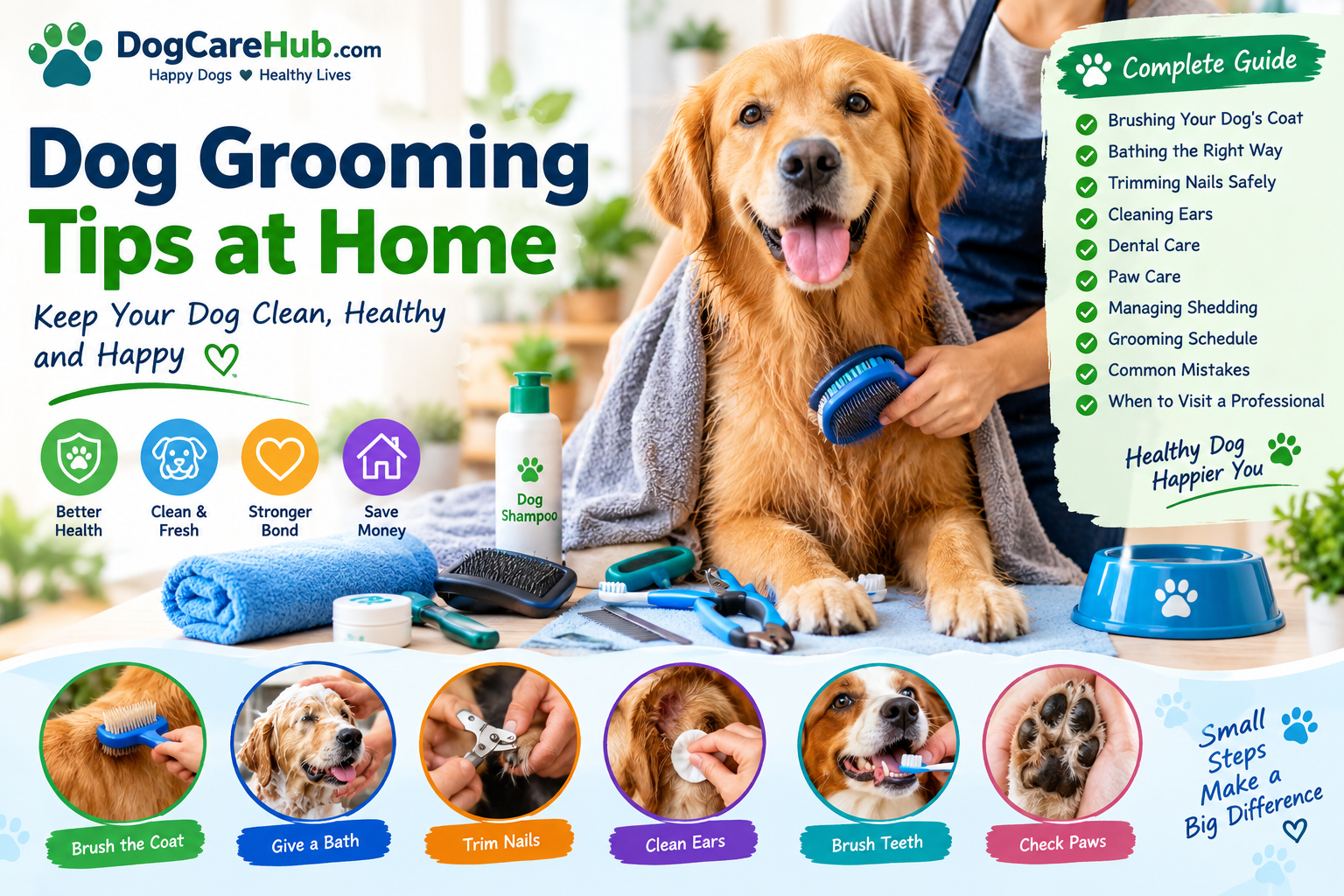
Taking care of your dog’s appearance is an important part Dog Grooming Tips at Home of responsible pet ownership. Regular grooming helps keep your dog clean, comfortable, and looking healthy. It also gives you an opportunity to check your pet’s skin, coat, ears, paws, and nails for possible problems.
Learning Dog Grooming Tips at Home can help you maintain your pet’s hygiene without visiting a professional groomer for every routine task. With the right tools, patience, and a consistent schedule, many basic grooming activities can be performed safely at home.
Every dog is different. Some breeds have short coats that need Dog Grooming Tips at Home minimal brushing, while others have long or curly hair that requires frequent attention. Your dog’s age, coat type, health, and temperament should guide your grooming routine.
In this comprehensive guide, we will explain how to brush your dog’s coat, bathe your pet, trim nails safely, clean ears, maintain dental hygiene, and create a comfortable grooming environment.
Contents
- 1. Why Is Dog Grooming Important?
- 2. 1. Gather the Right Grooming Tools
- 3. 2. Brush Your Dog’s Coat Regularly
- 4. 3. Bathe Your Dog the Right Way
- 5. 4. Trim Your Dog’s Nails Safely
- 6. 5. Clean Your Dog’s Ears Carefully
- 7. 6. Maintain Your Dog’s Dental Hygiene
- 8. 7. Keep Your Dog’s Paws Clean
- 9. 8. Manage Shedding and Loose Hair
- 10. 9. Choose the Right Grooming Schedule
- 11. 10. Make Grooming Comfortable for Your Dog
- 12. 11. Common Dog Grooming Mistakes to Avoid
- 13. 12. When Should You Visit a Professional Groomer?
- 14. Frequently Asked Questions
- 15. Conclusion
Why Is Dog Grooming Important?
Grooming is about more than making your dog look attractive. It supports cleanliness and helps you notice changes that may require veterinary attention.
Regular brushing removes loose hair, distributes natural skin oils, and can reduce tangles. Bathing removes dirt and unpleasant odors when necessary. Nail maintenance helps prevent overgrown nails from causing discomfort, while dental care supports oral health.
Following Dog Grooming Tips at Home also allows you to develop trust with your dog. Gentle handling and positive rewards can make grooming a pleasant experience rather than something your pet fears.
However, grooming cannot replace veterinary care. If you notice unusual lumps, painful skin, persistent itching, ear discharge, or other concerning symptoms, consult a veterinarian.
1. Gather the Right Grooming Tools
Before beginning, prepare the supplies you need. Using appropriate tools makes grooming easier and reduces the risk of irritating your dog’s skin.
Essential grooming supplies include:
- A dog brush suitable for your pet’s coat type
- A metal comb for checking tangles
- Dog-specific shampoo
- Soft towels
- A nonslip mat
- Dog nail clippers or a suitable nail grinder
- Dog toothbrush and pet-safe toothpaste
- Cotton pads for cleaning the outer ear when appropriate
- Treats to reward calm behavior
Avoid using human shampoo because its formulation Dog Grooming Tips at Home may not be suitable for canine skin. Choose products designed specifically for dogs.
When following Dog Grooming Tips at Home, keep scissors, nail tools, and cleaning products safely stored when they are not in use.
2. Brush Your Dog’s Coat Regularly
Brushing is one of the most important parts of a grooming routine. It removes loose hair, helps prevent mats, and allows you to inspect the skin.
Short-haired dogs may need brushing once or twice a week, while long-haired or curly-coated dogs may need daily brushing. These are general guidelines, and individual needs vary.
Start by brushing gently in the direction of hair growth. Pay attention to areas where tangles often form, such as behind the ears, beneath the legs, around the collar, and near the tail.
If you encounter a small tangle, work carefully with an Dog Grooming Tips at Home appropriate comb. Never pull hard because this can hurt your dog. Severe mats close to the skin should be handled by a professional groomer or veterinarian.
One of the most useful Dog Grooming Tips at Home is to keep brushing sessions short and reward your dog for staying relaxed.
3. Bathe Your Dog the Right Way
Bathing helps remove dirt, allergens, and unpleasant smells from your dog’s coat. However, dogs do not all need the same bathing frequency.
Some dogs may need a bath every few weeks, while others Dog Grooming Tips at Home can go longer between baths. Follow your veterinarian’s advice if your dog has a skin condition or requires a medicated shampoo.
Steps for a Safe Dog Bath
Step 1: Prepare the bathing area. Use lukewarm water and place a nonslip mat on the floor.
Step 2: Brush before bathing. Remove loose hair and manageable tangles before wetting the coat.
Step 3: Wet the coat gently. Keep water away from the eyes and avoid forcing water into the ears.
Step 4: Apply dog shampoo. Follow the product instructions and massage it gently into the coat.
Step 5: Rinse thoroughly. Shampoo residue can irritate the skin, so make sure the coat is completely rinsed.
Step 6: Dry carefully. Use a towel and keep your dog warm until the coat is dry. If using a hair dryer, choose a pet-safe setting with low heat and avoid directing hot air at the skin.
These Dog Grooming Tips at Home can make bath time safer and more comfortable for your pet.
4. Trim Your Dog’s Nails Safely
Overgrown nails can affect walking comfort and may split or Dog Grooming Tips at Home break. Regular nail checks help you determine when trimming is necessary.
Use clippers designed for dogs or an appropriate nail grinder. Introduce the tool gradually so your pet can become comfortable with its sound and feel.
Trim very small amounts at a time. The quick, which contains blood vessels and nerves, is easier to see in light-colored nails and may be difficult to identify in dark nails.
If you are unsure where to cut, ask a veterinarian or professional groomer to demonstrate the technique. Do not force your dog to remain still if it becomes frightened or struggles.
Following Dog Grooming Tips at Home means prioritizing safety over speed. It is perfectly acceptable to trim one or two nails per session until your dog becomes more comfortable.
5. Clean Your Dog’s Ears Carefully
Ear care is an important part of routine grooming, particularly for Dog Grooming Tips at Home dogs with floppy ears or those prone to ear problems.
Check the visible outer ear for dirt, redness, swelling, unusual odor, or discharge. If your veterinarian recommends ear cleaning, use a suitable veterinary ear-cleaning solution and follow its instructions.
Never insert cotton swabs or other objects deep into the ear canal. Avoid pouring water into the ears during bathing.
If your dog repeatedly shakes its head, scratches its ears, or shows signs of pain, contact a veterinarian instead of attempting to treat the problem yourself.
Good Dog Grooming Tips at Home include knowing when not to clean an area. Healthy ears do not always require frequent cleaning.
6. Maintain Your Dog’s Dental Hygiene
Dental care is often overlooked, but it is an important part of your dog’s overall health.
Use a toothbrush designed for dogs and toothpaste formulated specifically for pets. Human toothpaste should not be used because some ingredients, including xylitol in certain products, can be dangerous to dogs.
Introduce brushing slowly. Begin by allowing your dog to taste a small amount of pet toothpaste, then gently touch the teeth and gums before progressing to short brushing sessions.
Daily brushing is ideal when your dog tolerates it. If daily brushing is not possible, establish a consistent routine and ask your veterinarian about other appropriate dental-care options.
Bad breath, bleeding gums, difficulty eating, or loose teeth may indicate a dental problem that requires professional assessment.
7. Keep Your Dog’s Paws Clean
Your dog’s paws encounter dirt, grass, pavement, and other Dog Grooming Tips at Home surfaces every day. Checking them regularly can help you identify irritation or injuries early.
After walks, inspect the paw pads and the spaces between the toes. Remove loose dirt gently with a damp cloth and dry the paws afterward.
Look for cuts, swelling, redness, or foreign objects. If something is embedded deeply or your dog shows significant pain, seek veterinary assistance rather than digging into the paw.
Long hair between the paw pads may need trimming, depending on the breed. Use suitable tools and avoid cutting close to the skin.
These Dog Grooming Tips at Home help you maintain paw cleanliness while giving you an opportunity to check your pet’s comfort after outdoor activities.
8. Manage Shedding and Loose Hair
Many dogs shed naturally, and the amount varies by breed, Dog Grooming Tips at Home season, and individual health.
Regular brushing can collect loose hair before it spreads throughout your home. Use a brush designed for your dog’s coat and avoid aggressive brushing that may damage the skin.
Bathing with an appropriate dog shampoo may also help loosen some dead hair, but excessive bathing can cause dryness or irritation.
Do not shave a double-coated breed simply to reduce shedding without first discussing it with a knowledgeable groomer or veterinarian. A dog’s coat can provide protection from environmental conditions, and shaving may affect its natural function.
If shedding suddenly becomes excessive or is accompanied Dog Grooming Tips at Home by bald patches, redness, or persistent itching, seek veterinary advice.
9. Choose the Right Grooming Schedule
A consistent schedule helps prevent grooming tasks from becoming difficult or uncomfortable.
Here is a general routine you can adapt to your dog’s needs:
| Grooming Task | Suggested Frequency |
|---|---|
| Coat brushing | Weekly or more often, depending on coat type |
| Bathing | When needed, according to coat and skin condition |
| Nail inspection | Weekly |
| Nail trimming | When needed |
| Ear inspection | Weekly |
| Tooth brushing | Ideally daily |
| Paw inspection | After outdoor activities |
| Professional grooming | As required by breed and coat type |
These recommendations are general rather than strict rules. Puppies, senior dogs, long-haired breeds, and pets with medical conditions may need different care.
When applying Dog Grooming Tips at Home, adjust the schedule according to your pet’s comfort and the advice of your veterinarian.
10. Make Grooming Comfortable for Your Dog
Some dogs enjoy brushing and bathing, while others feel nervous around unfamiliar tools or handling.
Introduce grooming gradually. Allow your dog to investigate Dog Grooming Tips at Home the brush or clippers before using them. Begin with short sessions and reward calm behavior with praise and suitable treats.
Choose a quiet environment and avoid rushing. If your dog becomes distressed, pause and try again later.
Never punish a dog for being afraid. If grooming triggers repeated snapping, intense fear, or aggressive behavior, consult a veterinarian or qualified behavior professional for safe guidance.
One of the most effective Dog Grooming Tips at Home is to build positive associations through patience and consistency.
11. Common Dog Grooming Mistakes to Avoid
Even well-meaning owners can make mistakes during grooming. Avoid the following problems:
Using human products: Human shampoos and toothpaste Dog Grooming Tips at Home may contain ingredients unsuitable for dogs.
Brushing too aggressively: Hard brushing can irritate the skin and make future grooming stressful.
Ignoring mats: Tight mats can pull on the skin and cause pain. Seek professional help when they cannot be removed safely.
Cutting nails too short: Cutting into the quick causes pain and bleeding.
Using hot water or hot air: Excessive heat may burn or irritate your dog’s skin.
Ignoring warning signs: Persistent itching, unusual odors, wounds, or ear discharge should not be treated as ordinary grooming issues.
Forcing long sessions: Prolonged grooming can overwhelm a nervous dog. Short, calm sessions are often more effective.
Responsible Dog Grooming Tips at Home focus on your dog’s health and comfort rather than appearance alone.
12. When Should You Visit a Professional Groomer?
Home grooming is suitable for many routine tasks, but professional assistance is useful in certain situations.
Consider visiting a groomer if your dog has severe mats, a complicated coat, or needs a breed-specific haircut that you cannot perform safely.
Professional grooming may also be appropriate when your pet becomes highly anxious during brushing or when you do not feel confident using nail-trimming tools.
Choose a groomer who handles animals gently, maintains clean equipment, and explains the services being provided.
If the issue involves pain, skin disease, ear problems, unusual Dog Grooming Tips at Home lumps, or possible infection, contact a veterinarian rather than relying on grooming alone.
Frequently Asked Questions
How often should I groom my dog at home?
The frequency depends on your dog’s coat, breed, lifestyle, and skin condition. Short-haired dogs often need less brushing than long-haired dogs. Regular inspections help you decide what your pet needs.
Can I use human shampoo on my dog?
It is best to use a shampoo formulated specifically for dogs. Human products may not be suitable for canine skin and can cause irritation.
How can I make my dog enjoy grooming?
Introduce tools slowly, use gentle handling, keep sessions short, and reward calm behavior. Stop if your dog becomes very distressed.
Is it safe to cut my dog’s nails at home?
It can be safe if you use appropriate tools and understand where the quick is located. Ask a veterinarian or groomer for a demonstration if you are unsure.
Do all dogs need professional grooming?
No. Many dogs can receive routine care at home, but some coat types require regular professional trimming or specialist care.
What should I do if my dog has itchy skin?
Persistent itching, redness, hair loss, or sores may indicate an underlying problem. Contact your veterinarian instead of relying only on grooming products.
Conclusion
Regular grooming helps keep your dog clean, comfortable, and easier to monitor for potential health problems. By brushing the coat, bathing when necessary, trimming nails carefully, checking ears, maintaining dental hygiene, and inspecting paws, you can create a practical care routine.
The best results come from patience, appropriate tools, and a schedule tailored to your dog’s individual needs. Remember that home grooming is not a replacement for veterinary care when health concerns arise.
Start with short sessions and focus on making the experience positive for your pet. With consistency and gentle handling, grooming can become a valuable part of your relationship with your dog.
Use these Dog Grooming Tips at Home as a starting point and adjust your routine as your dog grows, changes, and develops different grooming needs.